
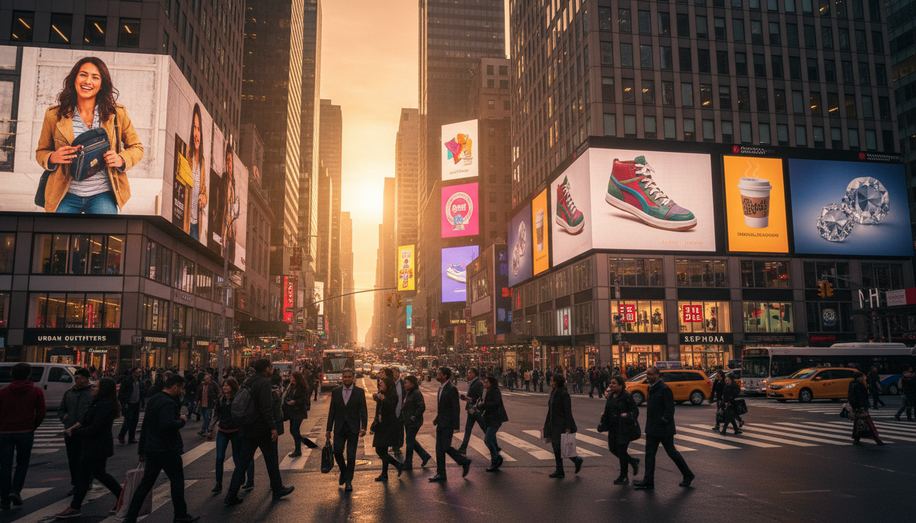

Out-of-home (OOH) advertising has emerged as a cornerstone of retail media networks, seamlessly weaving physical visibility into the digital fabric of shopper journeys to drive immediate sales and enduring brand presence. By placing dynamic screens and strategic displays near stores, retailers amplify their in-store influence while extending reach to surrounding areas, creating a halo effect that turns passive passersby into active buyers.
This integration thrives on the omnichannel nature of modern retail media, where OOH serves as the bold, unmissable anchor. Digital out-of-home (DOOH) screens, now powered by 5G and programmatic buying, deliver real-time content tailored to weather, traffic, or local events, ensuring messages resonate precisely when consumers are primed to act. Retailers merge loyalty program data with exposure metrics from nearby billboards and transit ads, quantifying uplift in store visits and sales at a granular level. For instance, a high-definition display outside a shopping district can trigger geofenced mobile notifications, guiding shoppers from awareness to impulse purchase without ever relying on intrusive cookies.
The power of OOH lies in its ability to influence purchasing decisions at critical proximity points. Ads on bus shelters, street furniture, and digital billboards near retail clusters create urgency, especially during peak shopping windows like weekends or sales events. Clothing chains, pharmacies, and hypermarkets deploy citylights and transit wraps to draw foot traffic directly to doorsteps, boosting footfall by reinforcing digital promotions seen online. When synchronized with in-store digital signage or apps, these efforts form a closed-loop ecosystem: a commuter spots a DOOH ad for a discounted gadget en route, scans a QR code for a coupon, and completes the transaction inside.
Beyond the store perimeter, OOH expands brand reach through contextual synergy. Combining outdoor visibility with digital amplification—via retargeting, social shares, and search spikes—extends campaign lifespan and measurability. Brands track correlations between billboard impressions and surges in nearby website traffic, app downloads, or branded searches, attributing offline exposure to online conversions. Retail media networks, increasingly incorporating DOOH into their frameworks, leverage this data for omnichannel attribution, proving OOH’s role in lifting overall ROI. CPG giants and D2C startups alike benefit, using mass awareness from transit media to build trust, then nudging consumers via programmatic mobile ads toward nearby stores.
Strategic placement is paramount in this retail-OOH fusion. High-traffic corridors, transit hubs, and geofenced zones around physical locations maximize exposure to intent-driven audiences. Programmatic DOOH allows instantaneous creative swaps, such as promoting rain gear during sudden downpours outside a department store, heightening relevance and engagement. This dynamic capability addresses past criticisms of OOH as unmeasurable, transforming it into a data-rich pillar that plugs into broader retail media stacks alongside CTV, social, and search.
Retailers gain a competitive edge by fostering seamless customer journeys. A shopper encountering consistent messaging—on a mall elevator screen, then via Instagram retargeting, and finally in-aisle—experiences reinforced familiarity that accelerates decisions. Earned media amplifies this: striking visuals spark user-generated content, extending organic reach without extra spend. Industries from FMCG to automotive report stronger performance when OOH anchors digital efforts, with North America leading adoption and Asia-Pacific accelerating via urban digitization.
Challenges persist, including regulatory hurdles in Europe that cap new sites and fragmented measurement standards across providers. Yet, the sector counters with standardization pushes and static-to-digital conversions, projecting market growth to nearly $50 billion by 2031, fueled precisely by retail media ties. Privacy-compliant reach positions OOH as a stable alternative in a cookie-less world, enhancing trust in brand interactions.
Ultimately, OOH elevates retail media networks by bridging the physical-digital divide, turning retail vicinities into high-conversion zones. As shopper paths fragment further, its unskippable presence—bolstered by tech integration—ensures brands not only capture attention but convert it into loyalty and revenue, solidifying OOH’s indispensable role in driving in-store and nearby success.