
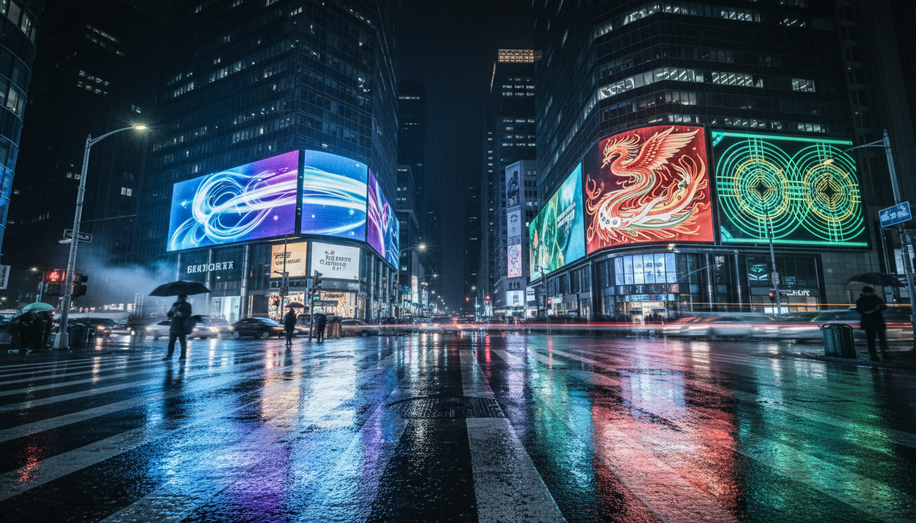

In the high-stakes world of out-of-home (OOH) advertising, where billboards once relied on gut instinct and traffic counts, predictive analytics is rewriting the rules. By harnessing machine learning and vast datasets, advertisers can now forecast campaign performance, pinpoint optimal placements, and boost return on investment before a single ad goes live.
This shift marks a departure from traditional guesswork. Predictive analysis sifts through historical data—foot traffic patterns, weather fluctuations, consumer behaviors, and even gas prices—to uncover hidden trends. For outdoor advertisers, it means simulating outcomes with remarkable precision. Algorithms process demographic profiles, mobility data, and psychographic insights to segment audiences, ensuring messages land with the right people at peak times. A Forbes-cited example highlights how machine learning integrates variables like seasonal demand to refine strategies, turning raw data into actionable forecasts.
At its core, predictive analytics employs statistical modeling to predict future behaviors from past patterns. Regression models estimate numerical metrics such as impressions or click-through rates, while ensemble techniques like random forests and gradient boosting machines combine multiple algorithms for superior accuracy. In OOH, these tools analyze high-traffic zones, commuter routes, and event-driven surges to recommend placements. Location intelligence, powered by real-time mobility analytics, reveals peak hours and audience densities, allowing brands to geo-fence competitors’ sites or high-footfall areas for maximum exposure.
Consider the practical edge this provides. Advertisers can forecast how a campaign might perform by modeling variables like daytime populations or behavioral shifts. One automotive dealer, using commuter traffic analytics and mobile geofencing around billboards, reached 180,000 unique devices, drove 12,000 store visits, and lifted web traffic by 21% in targeted zip codes. Such attribution links exposure directly to outcomes, moving beyond vague impressions to verifiable ROI.
Real-time optimization amplifies these gains, especially in digital OOH (DOOH). AI-driven systems monitor live data, adjusting content on digital billboards to match audience flows or external triggers like weather. For HVAC firms, predictive models trigger heating ads ahead of cold fronts, prioritizing budgets where demand spikes. Programmatic buying automates this further, using algorithms to buy and sell ad slots dynamically, ensuring agility in response to local events or trends.
Audience targeting has evolved dramatically too. Data insights delineate neighborhoods by age, income, or lifestyle, placing ads on routes frequented by key segments. Tools visualize mobile signal density and connect it to demographics, crafting hyper-personalized strategies. This precision minimizes waste: instead of blanketing broad areas, campaigns focus on high-value intersections of behavior and context, forecasting engagement before launch.
Yet, selecting the right models remains crucial. The choice hinges on data quality, prediction goals, and interpretability—linear regression for simple forecasts, advanced ensembles for complex scenarios. Evaluating performance via metrics like accuracy ensures the best fit, while integrating with broader marketing stacks ties OOH to online journeys, tracking everything from brand recall to conversions.
Challenges persist, including data privacy and model biases, but advancements in AI are addressing them. Firms like Nickelytics leverage precise location data for pre-launch simulations, predicting audience reactions with confidence. Predikdata’s mobility tools segment by real-time traffic, optimizing for in-store lifts. As European Business Magazine notes, this data age has made OOH dynamic and measurable, centered on evidence-backed impact.
The payoff is clear: higher efficiency, sharper targeting, and campaigns that predict success rather than chase it. Effortless Outdoor Media’s geofencing exemplifies how data turns billboards into performance engines, attributing visits and online spikes to specific exposures. In DOOH, AI links displays to foot traffic and sales, fostering accountable advertising.
Looking ahead, predictive analytics promises even greater integration. By forecasting competitor strategies and consumer responses, it equips OOH pros to outmaneuver rivals. As algorithms grow smarter, pre-launch optimization will become standard, ensuring every dollar delivers peak performance. For an industry long defined by visibility, this is the ultimate forecast: a future where data doesn’t just inform campaigns—it guarantees their triumph.