
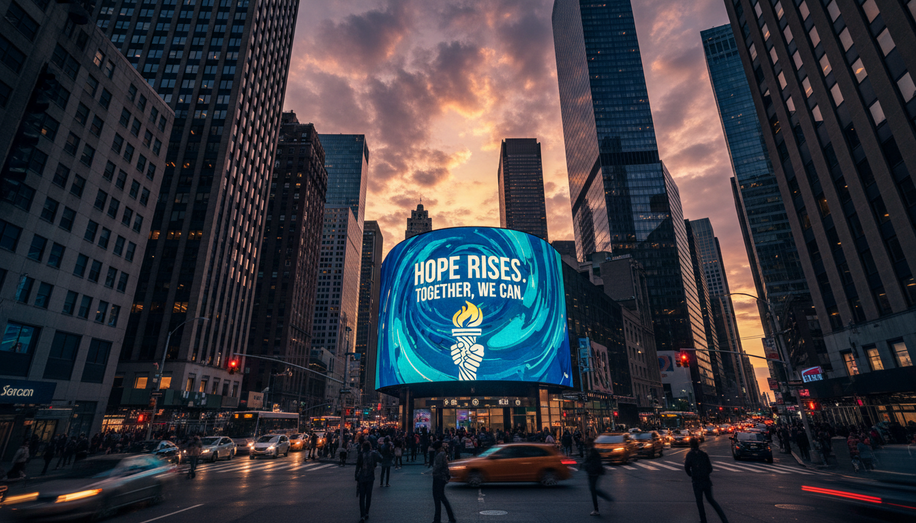

In the bustling corridors of urban life, where commuters rush past towering billboards and drivers glance at digital displays amid traffic, out-of-home (OOH) advertising emerges as a powerful ally for non-profits and public good initiatives. Unlike digital ads that can be scrolled away, OOH captures unavoidable attention, fostering immediate emotional connections that drive awareness and spur action for charitable causes. For organizations strapped by limited budgets, these static and digital billboards offer a high-impact channel to amplify missions, from childhood cancer research to climate advocacy, turning passive viewers into engaged donors and volunteers.
Consider the transformative partnership between Paradise Outdoor Advertising (POA) and The Kids’ Cancer Project in Queensland, Australia. In 2021, POA’s Doing Good Charity Program donated over $130,000 in billboard space across more than 1,400 sites, reaching 2.75 million people daily from Port Douglas to Mount Isa. This shift to digital billboards allowed quarterly support for multiple charities, up from one annually with static formats. POA staff selected the Kids’ Cancer Project after voting, moved by its research funding needs and personal cancer stories. Bold designs crafted with Jellyfish Marketing highlighted grim childhood cancer statistics, urging donations. The campaign built brand familiarity, tracked via donor referrals citing OOH, and even engaged POA employees through webinars with funded researchers and fun events like Pirate Day fundraisers. Such pro bono or discounted packages demonstrate how OOH providers can align corporate goodwill with non-profit goals, creating ripple effects beyond metrics.
Across the Pacific, DASH TWO, a U.S.-based agency specializing in nonprofit OOH, echoes this model with discounted or pro bono campaigns that prioritize mission over margin. Their portfolio spans urgent causes: Fridays for Future’s stark “The Earth is no toy” visuals rallied climate action; Revolt TV’s provocative “Vote or Die” targeted youth turnout; and Immigrants Are Essential underscored economic contributions with unmissable messaging. For Planned Parenthood, prescient ads foreshadowed Roe v. Wade challenges, while Impeach President Bannon garnered national media buzz. DASH TWO’s edge lies in nonprofit-savvy planning—understanding budget constraints, securing media buys at reduced rates, and measuring returns through foot traffic, donations, and supporter growth. Founder Gino Sesto’s decade-plus experience ensures campaigns connect with core audiences while attracting newcomers, proving OOH’s versatility for political, social, and health advocacy.
Strategic placement amplifies these successes. Inspiria Outdoor Advertising’s case studies reveal targeted OOH boosting awareness in precise demographics. A pandemic-era campaign for a volunteer-driven initiative countered isolation by promoting opportunities and donations in high-visibility spots. Similarly, efforts for water system upgrades hit affected communities directly, while family-oriented ads for the Deep Time/Fossil Hall at a D.C. museum used child-drawn dinosaurs to lure local parents and kids back post-lockdown. Zenni Optical’s bus-side takeover in New York City blanketed MTA routes for mass reach, a tactic non-profits can adapt for brand fame on shoestring budgets. High-income targeting in Northwest D.C. further shows OOH’s precision, focusing on households earning $75,000-plus to maximize volunteer and donor potential.
Yet effectiveness hinges on dedicated strategies tailored to non-profits’ realities. First, leverage partnerships: Agencies like POA and DASH TWO offer value-in-kind deals, freeing funds for programming. Pro bono rotations or employee-voted selections not only cut costs but build authentic endorsements, as seen when POA teams bonded over charity events. Second, prioritize bold, emotional creative: Simple, visceral messages—like POA’s cancer stats or Fridays for Future’s toy analogy—cut through clutter, evoking urgency without overwhelming details. Third, integrate measurement: Track website traffic spikes, donation attributions, and even foot traffic via geo-fencing, as Chicago digital billboards did for contests yielding 45,000 entries and $70,000 in prizes—adaptable for cause-based calls-to-action.
Digital OOH adds dynamism, enabling rotations for multiple messages or real-time relevance, like election-day voter drives. Hybrid approaches blend with social media; Patagonia’s environmental storytelling, while primarily online, gains OOH amplification for broader resonance. Challenges persist—budgets demand ruthless prioritization, and metrics like impressions must tie to actions via QR codes or vanity URLs. Still, OOH’s 94% aided recall rate outperforms many channels, making it indispensable for public good campaigns.
For non-profits, OOH transcends advertising; it’s a catalyst for community mobilization. The Kids’ Cancer Project’s Queensland exposure funneled funds to research, potentially saving lives. DASH TWO’s clients advanced rights and awareness, proving scalable impact. Public initiatives—from skin cancer alerts to immigrant advocacy—thrive when OOH strategies emphasize reach, relevance, and calls to action like “Donate Now” or “Volunteer Today.” In an era of fleeting attention, these enduring outdoor spectacles remind passersby of shared humanity, inspiring the collective action that defines progress. Non-profits ready to harness this medium should seek specialist agencies, craft unignorable visuals, and measure relentlessly—unlocking awareness that converts to enduring change.