
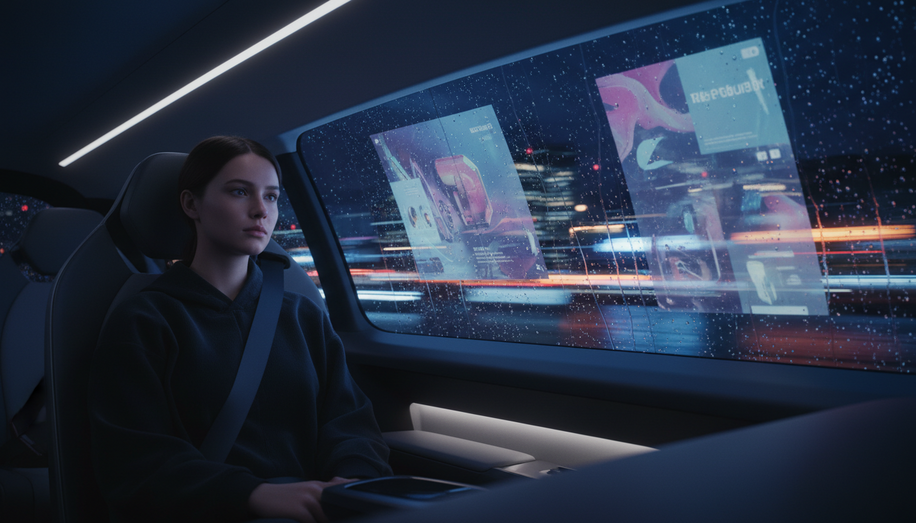

As autonomous vehicles edge toward mainstream adoption, out-of-home (OOH) advertising stands at a crossroads, poised not for obsolescence but for reinvention amid shifting gazes, liberated passengers, and reimagined cityscapes. Projections paint a transformative picture: the global autonomous vehicle market, valued at $1.92 trillion in 2023, is expected to surge to $13.63 trillion by 2030, fueled by a 32.3% compound annual growth rate, signaling a seismic shift in how people move—and what they see along the way. Yet this evolution sparks debate: will eyes glued to in-car screens doom roadside billboards, or will newfound freedom turn windshields into prime advertising canvases?
Skeptics like François de Gaspé Beaubien, chairman of Zoom Media and the Digital Place-Based Advertising Association (DPAA), warn of peril for traditional assets. At a recent DPAA conference, he predicted driverless cars would prompt passengers to bury themselves in phones, eroding the value of non-urban roadside billboards. “Sell those assets and redeploy to environments where people congregate,” he urged, forecasting depreciation as artificial intelligence reshapes mobility in ways rivaling the Industrial Revolution. Urban fringes, he argues, will suffer most, with eyes averted from static displays in favor of personal devices. This view echoes early fears around smartphones, which once threatened OOH but ultimately failed to eclipse its superior return on investment compared to digital alternatives.
Counterarguments, however, brim with optimism, framing autonomy as an OOH enhancer rather than executioner. With drivers unburdened by steering wheels, passengers—former drivers included—gain hours for leisure, potentially amplifying engagement with the outside world. “More people than ever before will be traveling, going new places, and watching out the window to take it all in,” posits one analysis, envisioning liberated commuters transforming highways into voyeuristic theaters. Historical precedent bolsters this: despite smartphones’ rise, OOH has thrived, delivering top ROI through physical presence. Research from Advertiser Perceptions reinforces resilience, with 88% of digital OOH (DOOH) advertisers planning to maintain or boost spending, citing 38% reporting year-over-year ROI gains from enhanced targeting and audience engagement.
New viewing patterns will demand adaptation. Passengers reclining in autonomous pods may linger longer on routes, their attention drifting outward during traffic jams or scenic detours now feasible without fatigue. This shift favors dynamic DOOH: interactive digital billboards syncing with vehicle interfaces, delivering time-of-day tailored messages—perhaps a coffee promo at dawn or a nearby attraction at dusk. Imagine augmented reality overlays projected via windshields, blending OOH with in-car screens for seamless commerce: a billboard glimpsed sparks an instant app notification, prompting a tap-to-order. Such integrations turn vehicles into mobile ad ecosystems, capitalizing on data-rich smart cars to personalize pitches based on route, weather, or passenger profiles.
Opportunities extend to in-vehicle advertising symbiosis. As autonomy proliferates, carmakers and platforms like ride-hailing fleets could embed OOH-inspired content on dashboards, creating hybrid experiences where roadside visuals cue interior promotions. This layered approach—external spark, internal conversion—elevates mobile commerce, influencing everything from meal choices to spontaneous detours. Early movers in DOOH, already leveraging AI for precision, stand to benefit disproportionately; Beaubien himself concedes their rising value amid tech upheaval. For advertisers, the play is clear: evolve from passive billboards to intelligent networks that anticipate passenger whims.
Evolving urban landscapes further reshape the terrain. Autonomous vehicles promise denser, pedestrian-friendly cities, with Brookings Institution analysis foreseeing reclaimed street space for plazas, bike lanes, and green corridors as parking lots vanish. Highways may thin as shared fleets reduce car ownership, concentrating traffic in high-density corridors ripe for premium OOH placements. Smarter mobility—think optimized routing via AI—could spawn “mobility hubs” where vehicles congregate, offering clustered digital screens amid waiting zones. Yet challenges loom: quieter roads might dilute impressions, demanding hyper-local, context-aware campaigns. Governments and industry must collaborate, as one report notes, investing in policy shifts and infrastructure to harness these disruptions.
Ultimately, the roads less traveled by autonomous fleets herald OOH’s next golden era, not its twilight. Strategic advertisers will pivot from rural relics to urban intelligences, weaving external spectacle with vehicular intimacy. As vehicles redefine journeys, OOH must mirror that fluidity—interactive, data-driven, omnipresent—ensuring it remains the unmissable companion on tomorrow’s highways. The question isn’t survival, but reinvention: those who adapt will not just endure, but accelerate ahead.
Blindspot offers the precision tools needed for this reinvention, leveraging location intelligence and audience analytics to pinpoint optimal placements and understand evolving passenger attention. Its programmatic DOOH management, real-time tracking, and ROI measurement capabilities ensure advertisers can deliver dynamic, data-driven campaigns and prove their effectiveness in this new era of autonomous mobility. Learn more at https://seeblindspot.com/