
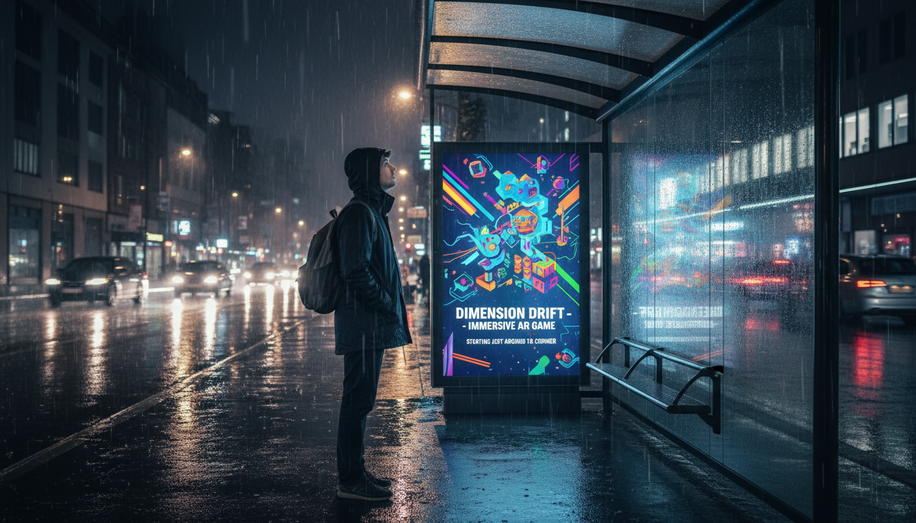

In the bustling heart of urban life, where digital noise drowns out traditional messages, out-of-home (OOH) advertising emerges as a vital spark in experiential marketing campaigns, transforming passive glances into active brand journeys. Far from static billboards of the past, modern OOH serves as a dynamic touchpoint, blending visibility with immersion to guide consumers through layered storytelling that lingers long after the encounter. Brands leveraging this approach don’t just advertise; they orchestrate sequences of real-world interactions that build emotional connections, turning everyday spaces into memorable brand narratives.
Consider the experiential marketing mix, where OOH acts as the connective tissue linking awareness, engagement, and advocacy. At its core, experiential marketing immerses audiences in sensory-rich encounters—pop-up events, live demos, or interactive installations—that foster participation over observation. OOH amplifies this by placing these moments in high-traffic arenas like airports, malls, and streets, where it cannot be skipped or scrolled past, reaching millennials and Gen Z who crave authenticity amid ad fatigue. For instance, digital LED screens on mobile billboards or event stages broadcast live video, social feeds, or countdowns, drawing crowds into branded activations such as product samplings or influencer meetups. This integration creates a feedback loop: participants engage, capture the moment on their phones, and amplify it organically through social media, extending the campaign’s reach exponentially.
Outdoor brands like The North Face and Arc’teryx exemplify OOH’s role in crafting holistic journeys. Their community-driven events—run clubs, climbing days, and adventure meetups—start with provocative OOH teasers on urban screens or billboards that evoke a lifestyle of exploration. These visuals, often paired with augmented reality (AR) elements, invite passersby to scan for virtual previews of gear in action, bridging the gap to physical retail experiences like Arc’teryx Academy sessions. Here, OOH doesn’t sell products outright; it sells aspiration, guiding consumers from curiosity sparked on a subway platform to hands-on validation at a store-hosted demo. The result? Deeper loyalty, as participants test waterproof shoes on rainy trails or climbing harnesses on rock walls, providing brands with real-world feedback that fuels innovation.
Technology supercharges OOH’s experiential power, evolving billboards into interactive portals. Dynamic digital displays deliver geo-targeted, real-time messages, while AR overlays let users visualize products in their environment via smartphone scans. Mobile billboards, with their 97% recall rate, roam cityscapes deploying multi-sensory tactics—sound, scent, even temperature—to heighten immersion. At major events, large-format LED screens serve as live canvases, syncing with on-ground activations to broadcast user-generated content or live performances, making the brand omnipresent yet intimately felt. Lean Cuisine’s #WeighThis campaign illustrated this mastery: OOH installations in public spaces invited emotional storytelling about body image, shifting focus from product pitches to shared narratives that drove mass impressions and enduring loyalty.
This strategic layering extends OOH beyond isolated tactics into a narrative arc. Campaigns begin with broad-awareness OOH in high-visibility spots, priming audiences for deeper dives—perhaps a Netflix teaser dominating Times Square that funnels viewers to pop-up viewing parties, or Nike’s hyper-local digital screens rallying runners to branded track events. Coca-Cola’s iconic signage, meanwhile, anchors festive urban moments, blending nostalgia with calls to interactive vending experiences. In each case, OOH guides the journey: it teases the story, facilitates entry points, and reinforces recall through shareable highs.
Yet success demands precision. Brands must align OOH with campaign goals, ensuring activations feel organic rather than intrusive—think grassroots collaborations with local influencers over corporate spectacles. Agencies specializing in experiential OOH, like those blending traditional media planning with immersive tech, stress measuring impact through dwell time, social lift, and foot traffic spikes. Challenges persist: high costs for capital-intensive setups require creativity, and execution hinges on location data for precise targeting.
Ultimately, OOH in the experiential mix redefines brand-consumer dynamics, turning transient exposures into transformative paths. As urban landscapes evolve with AI-driven personalization and VR transports, OOH stands ready to lead, proving that the most memorable journeys begin where the world meets the street. In an era of fleeting attention, these touchpoints don’t just capture eyes—they capture hearts, propelling brands toward lasting advocacy.