
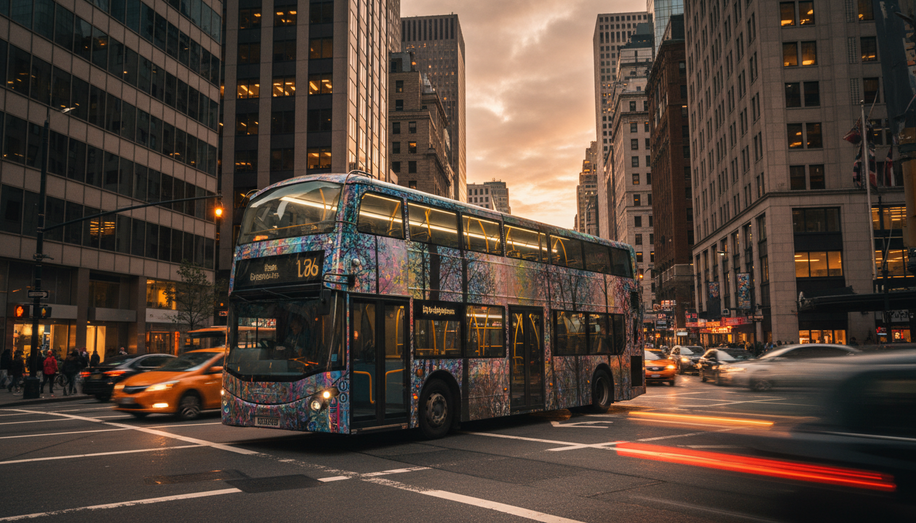

Vehicle advertising has evolved far beyond simple logo placement. Modern bus wraps and transit advertisements represent a sophisticated intersection of creative ambition, strategic thinking, and practical execution. When executed with precision, these mobile canvases transform everyday commutes into moments of cultural impact, demonstrating that constraints can fuel innovation rather than limit it.
The most successful vehicle wrap campaigns leverage unconventional design thinking to command attention in cluttered urban environments. Copenhagen’s Zoo campaign exemplifies this principle through sheer audacity. A hyperrealistic boa constrictor appeared to crush a city bus, creating an illusion so compelling that the zoo became one of Denmark’s most visited locations in 2010. The campaign proved that limited budgets need not constrain creative ambition; clever conceptualization and high-quality execution can generate worldwide recognition and accolades.
Design innovation often emerges from exploiting the unique physical properties of vehicles themselves. Dr. Best’s toothbrush campaign demonstrates this approach brilliantly by capitalizing on the joint between two articulated bus sections. By positioning the “Flex” toothbrush across this natural division point, the advertisement transformed the vehicle’s structural reality into a functional metaphor for product flexibility. Similarly, Air New Zealand’s campaign incorporated bus passengers as active participants in the advertisement, using them to frame destination imagery—an interactive approach that elevated the medium beyond passive observation.
The most effective bus wrap campaigns balance shock value with strategic clarity. Netflix’s Stranger Things promotion achieved messaging without requiring textual explanation; fans instantly recognized the inverted imagery referencing the series’ fictional “Upside Down” universe. This approach demonstrates how cultural literacy and visual design can communicate complex narratives in seconds—the time a commuter has to process a passing vehicle. Conversely, the Barbie movie campaign relied on bold aesthetic simplicity: bright pink buses proved visually impossible to ignore and generated over 100,000 likes on a single social media post. The campaign’s success stemmed from integrating the vehicle advertisement into a broader cross-format strategy, amplifying reach across multiple touchpoints.
Humor and psychological insight drive several celebrated examples. The Colorectal Cancer Association’s GetYourButtSeen campaign weaponized shock as awareness-building strategy, deliberately deploying taboo imagery to initiate public dialogue. Specsavers’ rear-end collision illusion employed optical deception to communicate a message about vision safety, forcing drivers to engage cognitively with the advertisement. The Careerbuilder campaign took provocative messaging further still, positioning “don’t jump” text atop buses viewed from skyscraper vantage points—a darkly comedic commentary on job hunting stress.
These campaigns share several design principles that distinguish successful vehicle advertising from forgettable efforts. First, they exploit specific physical characteristics of their medium—the joint on articulated buses, the antennae that become lobster horns, the perspective created by urban height differentials. Second, they prioritize immediate visual impact over textual communication; successful wraps communicate within seconds. Third, they frequently generate secondary value through social media amplification and earned media coverage, extending reach far beyond the vehicles themselves.
The practical challenges of vehicle advertising demand particular sophistication. Designers must account for viewing angles, vehicle movement, and the partial obscuration created by traffic and urban landscapes. Images must remain legible at distance and during rapid transit. Color choices must withstand weather exposure and maintain vibrancy over extended campaigns. These constraints, however, have produced some of advertising’s most memorable executions.
Contemporary vehicle wraps demonstrate that mobility itself constitutes a strategic asset. A bus wrap reaches diverse geographic locations and demographic groups simultaneously; the advertisement arrives at audiences rather than requiring them to seek it out. This forced exposure, combined with the novelty of well-executed creative work, generates engagement that stationary billboards struggle to achieve.
As brands increasingly recognize vehicle advertising’s distinctive advantages, the medium continues attracting creative talent and strategic investment. The most innovative campaigns recognize that buses, trams, and vehicles are not merely transportation infrastructure—they are dynamic, three-dimensional canvases capable of reshaping public perception, launching cultural conversations, and transforming mundane commutes into moments of creative discovery.
As vehicle advertising continues to push creative boundaries and foster cultural conversations, brands increasingly demand tangible proof of impact from these dynamic canvases. Blindspot empowers advertisers to precisely quantify the effectiveness of their mobile campaigns through advanced audience measurement, real-time performance tracking, and granular ROI attribution. This ensures that every strategic investment in these moving artworks translates directly into measurable business outcomes, validating creative audacity with undeniable data. https://seeblindspot.com/