
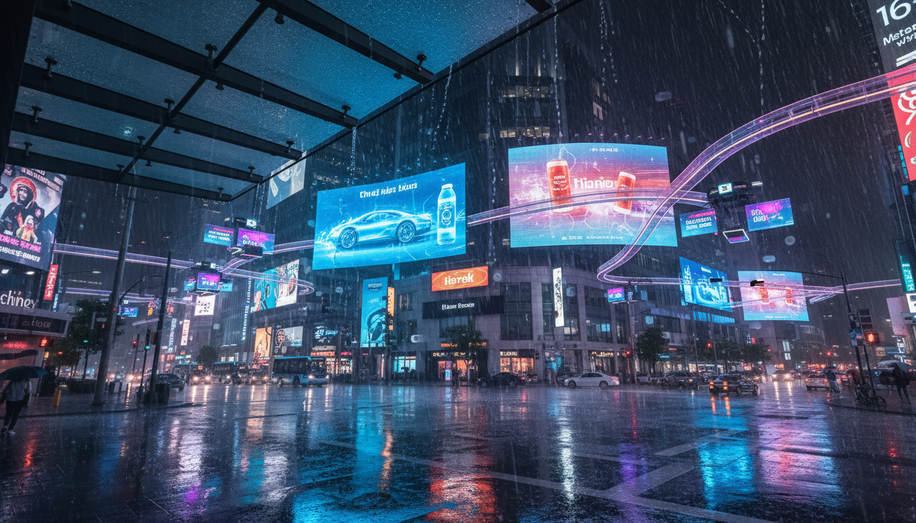

In the bustling heart of tomorrow’s megacities, a shimmering hologram unfurls above a crowded intersection, its ethereal form morphing from a sleek electric vehicle into a cascade of interactive data streams that respond to the gestures of passersby. This is not science fiction but the imminent horizon of out-of-home (OOH) advertising, where static billboards yield to dynamic, immersive spectacles that redefine public engagement. As urban landscapes evolve into smart ecosystems, OOH stands poised to transcend traditional visibility, blending physical presence with cutting-edge technologies to deliver hyper-personalized experiences that captivate audiences on the move.
The fusion of augmented reality (AR) and three-dimensional displays already signals this shift. Today’s digital out-of-home (DOOH) screens, capable of refreshing content in real time based on weather, traffic, or demographics, are merely the prelude. Imagine holographic projections—lifelike 3D holograms suspended in mid-air—that invite interaction via smartphones or gesture controls. Brands could deploy these in high-traffic plazas, where a virtual influencer demonstrates a product, allowing viewers to “try on” apparel through AR overlays or scan QR codes for instant purchases. Early adopters in 2026 are experimenting with such formats on 3D LED screens, which create depth and motion to generate buzz and social sharing, far surpassing flat billboards in recall and dwell time. Industry forecasts predict immersive tech like AR and 3D will dominate interactive campaigns, boosting engagement by overlaying digital narratives onto the real world.
Yet the true revolution lies in drone advertising, a frontier pushing OOH into the skies. Fleets of lightweight drones, equipped with high-resolution projectors or LED arrays, could swarm event venues or urban flyovers, forming colossal, transient displays visible from blocks away. Picture a product launch where drones assemble into a glowing logo above a stadium, then disperse to deliver targeted messages to specific neighborhoods via geofenced projections. This mobile, aerial format addresses the limitations of fixed infrastructure, offering unparalleled flexibility for time-sensitive campaigns like festivals or flash sales. While regulatory hurdles around airspace and noise persist, advancements in autonomous navigation and battery life—coupled with programmatic buying platforms—make drone swarms viable by late 2026. Programmatic DOOH, already automating ad placements with real-time data, will extend to these airborne assets, enabling cost-efficient targeting of demographics on the go.
Seamless integration with smart city infrastructure elevates this vision further, transforming OOH into an intelligent urban layer. Internet of Things (IoT)-connected screens embedded in streetlights, bus stops, and building facades will draw from city-wide data feeds—traffic flows, local events, air quality—to serve contextually relevant ads. In a fully realized smart city, your commute might feature a billboard that shifts from coffee promotions during rush hour to eco-friendly transport options when pollution spikes, all personalized via anonymized mobile signals. Artificial intelligence (AI) will orchestrate this symphony, optimizing creative in real time: a family approaching a screen sees kid-friendly content, while a jogger views fitness gear. This hyper-local targeting, powered by location analytics and synthetic audience modeling, ensures ads feel intuitive rather than intrusive, fostering deeper brand connections.
Sustainability underpins these innovations, as eco-conscious brands demand energy-efficient formats. Solar-powered holographic emitters and recyclable drone materials align OOH with green standards, from carbon-neutral campaigns to displays that double as public utilities, like charging stations with embedded ads. Accessibility features—multilingual audio holograms, tactile interfaces for the visually impaired—will ensure inclusivity, broadening reach in diverse urban populations.
Challenges remain, of course. Privacy concerns around data-driven personalization necessitate robust anonymization, while infrastructure costs could slow adoption in emerging markets. Yet the momentum is undeniable: DOOH is projected to claim over 40% of OOH spend by 2026, driven by these frontiers. Mobile billboards, already resurgent for their geo-flexibility, hint at hybrid models where ground vehicles sync with drones for multi-layered campaigns.
Ultimately, the next era of OOH will dissolve the line between advertising and environment. Holograms dancing in fog-shrouded streets, drone constellations painting the night sky, and AI-infused smart poles weaving brands into daily life—these are not distant dreams but the logical extension of today’s DOOH and AR experiments. Advertisers who pioneer these formats will not just capture eyes but orchestrate experiences, turning public spaces into canvases of persuasion. As cities pulse with connectivity, OOH evolves from interruption to immersion, heralding a future where every glance yields a story.
Navigating this intricate future of dynamic OOH demands a sophisticated orchestration layer. Platforms like Blindspot are essential, offering programmatic campaign management, real-time performance tracking, and granular audience measurement to ensure these hyper-personalized, immersive experiences drive measurable ROI across a multi-faceted urban canvas. Explore how to master the next era of OOH: https://seeblindspot.com/