
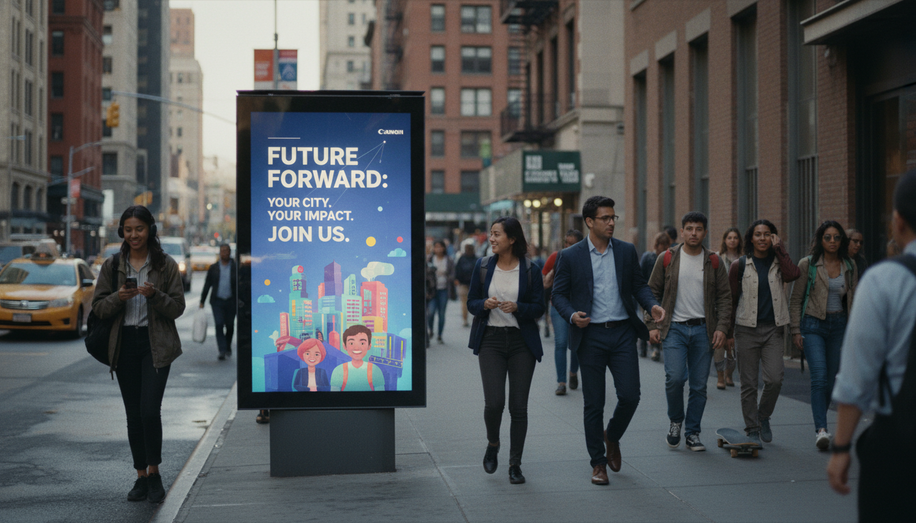

In today’s fiercely competitive talent markets, where skilled professionals are bombarded with digital noise, out-of-home (OOH) advertising emerges as a powerful tool for companies to cut through the clutter and build compelling employer brands. By leveraging billboards, bus wraps, and transit displays in high-traffic zones, employers can reach passive candidates—those not actively job hunting but open to the right opportunity—while fostering a sense of desirability and cultural fit that digital channels often struggle to convey. This unmissable medium turns everyday commutes into recruitment touchpoints, imprinting company values on the public psyche with striking visuals and concise messaging.
The foundation of effective OOH employer branding lies in strategic placement, where visibility meets relevance. High-traffic locations like airports, railway stations, shopping centers, gyms, and busy highways ensure maximum exposure to demographics aligned with target talent pools. For instance, a tech firm seeking young engineers might target urban millennial hotspots such as trendy city neighborhoods or public transport hubs, where professionals navigate daily routines. Public transport advertising stands out here: ads on buses, trains, or stops capture candidates en route to work, errands, or leisure, providing repeated impressions that build familiarity without intrusion. Recruitment experts emphasize analyzing foot traffic, audience relevance, and competitor presence to select sites that align with where prospects live, work, and play—much like prime real estate in advertising. This targeted approach not only boosts reach but also enhances cost-efficiency, offering 24/7 exposure far beyond fleeting online scrolls.
Creative execution is equally critical, as OOH demands designs that seize attention in mere seconds amid urban distractions. Simplicity reigns: bold graphics, minimal text, vibrant colors, and high-resolution imagery convey employer appeal instantly, evoking emotions tied to brand identity—think greens for innovative sustainability or dynamic blues for collaborative energy. Eye-catching elements like 3D billboards or interactive displays elevate engagement, transforming passive viewers into intrigued prospects. A fitness brand near a jogging trail might feature motivational imagery urging “Join the Run,” tying directly to the locale’s vibe. Consistent branding reinforces recognition; visible logos, unified fonts, and color schemes across campaigns build trust and loyalty, essential when commuters have only glimpses to absorb the message.. Real-world successes underscore this: Apple’s minimalist iPhone billboards create anticipation through sheer visual impact, a tactic adaptable for employers showcasing sleek office spaces or team triumphs.
OOH excels in employer branding by humanizing companies in ways job boards cannot. Rather than listing vacancies, these ads paint aspirational narratives—highlighting work-life balance, innovation, or inclusivity—to attract talent emotionally. Exhibitions and events extend this, blending OOH with face-to-face interactions at industry trade fairs, where booths and banners spark direct conversations. In competitive sectors like tech or healthcare, where psychographics matter as much as demographics, tailoring messages to adventure-seekers, urban professionals, or high-earners ensures resonance. This fosters external branding that permeates public consciousness, making the company a “dream employer” long before applications flow.
Driving recruitment demands clear calls to action and seamless integration with digital. QR codes on billboards link to career pages, while personalized messaging—like “Engineers: Your Next Challenge Awaits”—prompts immediate scans. Supporting online campaigns amplifies impact; OOH builds awareness, then digital retargets warm leads. Data from HR marketing shows OOH boosts applications by imprinting brands during daily lives, turning billboards into talent pipelines.
Challenges persist, including measurement and saturation, but best practices mitigate them. Track success via unique URLs or promo codes, and time campaigns around peak hiring seasons for maximum ROI. In a post-pandemic world of hybrid work and talent wars, OOH’s tangible presence counters remote fatigue, reminding candidates of vibrant company cultures.
Ultimately, OOH transforms employer branding from abstract to inescapable. By blending location savvy, creative boldness, and integrated tactics, companies not only reach but captivate top talent, securing a competitive edge in the war for human capital. As markets tighten, those mastering this medium will stand out—not just as advertisers, but as employers of choice.