
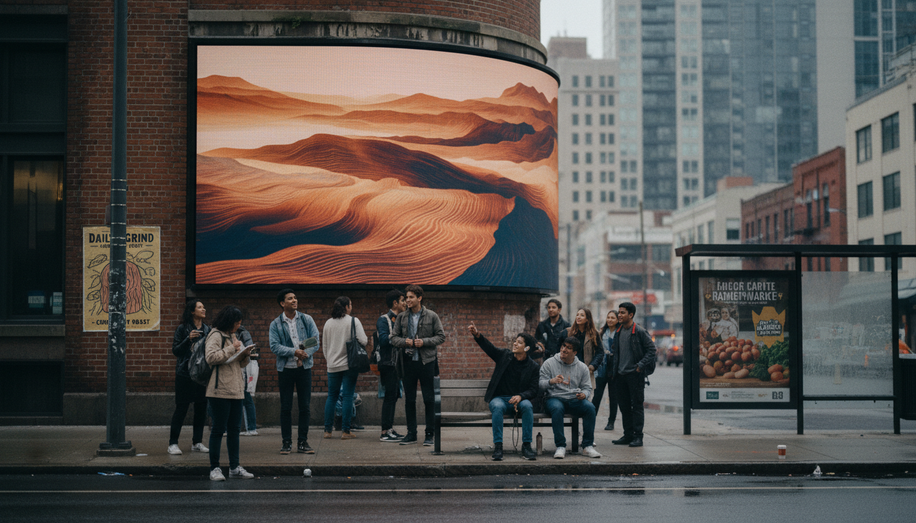

Out of Home advertising has long been dismissed as merely a commercial medium, a way to sell products to passing pedestrians and commuters. Yet this view fundamentally misunderstands the role that outdoor advertising plays in shaping the very fabric of our cities. Far beyond billboards hawking consumer goods, OOH media has become an integral component of urban identity, contributing to the aesthetic appeal, cultural character, and informational landscape of our public spaces.
Consider the iconic Times Square billboards in New York City, which have transcended their commercial purpose to become quintessential elements of the cityscape itself. These structures are no longer simply vehicles for advertising—they are architectural landmarks that define the city’s visual identity and contribute to its unique character and charm. When thoughtfully designed and strategically placed, outdoor advertising machines can significantly enhance the visual appeal of urban landscapes, adding color, vibrancy, and liveliness to otherwise mundane cityscapes. This transformation of public spaces demonstrates how OOH can complement rather than detract from the built environment.
The aesthetic contribution of outdoor advertising extends beyond visual appeal. These installations can facilitate a harmonious blend of modernity and heritage, respecting a city’s architectural style while introducing contemporary design elements. When brands approach outdoor campaigns with creativity and cultural sensitivity, they turn streets and transit hubs into platforms for artistic expression. Consider campaigns like Heineken’s \”Cities of the World,\” which celebrated local culture and identity through billboards created entirely from bottles, demonstrating how commercial messaging can simultaneously honor community character. Such campaigns show that OOH advertising need not be at odds with cultural preservation—it can enhance it.
Beyond aesthetics, outdoor advertising machines play a crucial role in information dissemination that extends far beyond commercial messaging. They serve as communication channels for public service announcements, news updates, and event information that benefit entire communities. In an increasingly connected urban environment, these displays can be integrated with smart city infrastructure to provide real-time traffic updates, wayfinding assistance, and environmental data. This dual function—serving both commercial and public interests—positions OOH as an essential part of civic infrastructure rather than a mere commercial intrusion.
The relationship between OOH advertising and community engagement deserves particular attention. By operating in public spaces visible around the clock, outdoor advertising creates shared visual experiences that bind urban communities together. Commuters who pass the same advertisement daily develop a subconscious connection with the message, whether commercial or civic. This repetition, while often leveraged for brand building, can equally serve to reinforce community values, public health messages, or cultural awareness campaigns. The placement of advertisements in high-traffic areas—busy streets, shopping centers, and public transport hubs—means they reach diverse demographics spanning all age groups and economic backgrounds. This democratic accessibility distinguishes OOH from many digital media forms, ensuring that public messages reach entire communities regardless of their online engagement habits.
However, realizing OOH’s potential to enhance rather than diminish urban spaces requires careful planning. The integration of advertising machines into urban landscapes demands thoughtful consideration to balance their benefits against potential negative impacts. An abundance of poorly designed or strategically placed advertisements can erode a city’s unique identity, particularly in neighborhoods with rich historical or cultural architecture. This reality underscores the importance of regulation and professional oversight in outdoor advertising.
The future of OOH lies in recognizing that public spaces belong to communities first and advertisers second. When outdoor advertising agencies and brands approach their work with this understanding—prioritizing aesthetic harmony, cultural sensitivity, and informational value alongside commercial goals—OOH becomes more than a marketing channel. It becomes a tool for shaping vibrant, connected urban environments where advertising enhances rather than competes with community identity. In this evolved role, outdoor media contributes meaningfully to the cities we inhabit, transforming commercial necessity into cultural asset.