
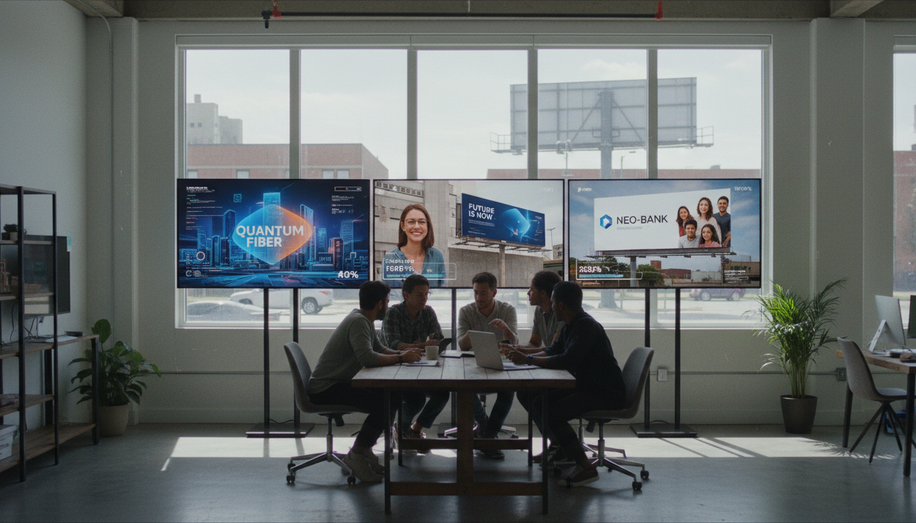

In the high-stakes world of out-of-home (OOH) advertising, where seconds of commuter attention can make or break a campaign, artificial intelligence is emerging as a game-changer for creative teams. AI-powered tools are now enabling rapid ideation, generation, and refinement of ad copy and visuals, transforming static billboards into dynamic storytelling machines tailored to hyperlocal contexts. This shift is particularly potent in digital OOH (DOOH), where screens can update in real time, responding to weather, traffic, or audience demographics with precision that once demanded weeks of human labor.
Consider the storage company PODS, which deployed a roving digital billboard on one of its trucks in New York City. Powered by Google’s Gemini AI platform, the truck traversed all 299 neighborhoods in just 29 hours, generating over 6,000 unique headlines on the fly. Inputs like time, weather, traffic, and subway delays fed into the system, producing quips such as “73 degrees out? Spend the day at Coney Island, not hauling boxes.” The campaign, prepared by feeding the AI brand guidelines, marketing plans, and executive transcripts, drove a 60% surge in website visits—a feat agency leaders described as humanly impossible without the technology. This exemplifies AI’s prowess in ideation: it sifts through vast datasets to spawn contextually relevant copy at scale, freeing creatives from repetitive brainstorming.
Beyond generation, AI excels at refinement through data-driven iteration. Tools from companies like Billups leverage nearly two decades of campaign data, layered with social media insights, satellite imagery, and street-view photos, to analyze ad performance in real time. In one case, AI-generated heat maps revealed a high-fashion brand’s logo was too small to capture attention on DOOH screens. A simple enlargement led to measurable performance gains, identified faster than traditional testing allowed. Similarly, AI accelerates A/B testing, pitting subtle variations in messaging or visuals against each other across thousands of screens. “AI is helping us do those things much faster than ever before,” noted Billups’ Spooner, highlighting how algorithms now predict and optimize elements like color schemes or layout based on engagement metrics.
Visual optimization follows a parallel path. Machine learning algorithms dissect audience reactions via anonymized data from device geolocation, facial recognition on screens, and even environmental factors like foot traffic or nearby events. Platforms analyze which design elements—bold contrasts, prominent calls-to-action, or weather-aligned imagery—draw the most eyes, then suggest refinements. For instance, a fitness brand’s ads might intensify near gyms during peak hours, with AI swapping visuals from static poses to dynamic action shots if data shows higher dwell times. Dynamic Creative Optimization (DCO) takes this further, algorithmically remixing assets: swapping headlines, images, or colors in real time to match passing crowds or conditions, ensuring a winter coat ad vanishes during a heatwave.
This creative alchemy extends to programmatic buying, where AI automates not just placement but content evolution. Charel MacIntosh of Clinch explains that AI powers “creative automation at scale,” personalizing thousands of screens effortlessly while linking exposures to outcomes like foot traffic or sales lifts—as seen in Kia’s 8% sales boost from AI-driven ads at EV charging stations. Predictive analytics forecast which creatives will resonate, drawing from historical patterns and real-time signals to preempt underperformers. StreetMetrics’ platforms, for example, use ML to refine visuals by studying engagement with specific motifs, iteratively improving layouts for maximum impact.
Yet, AI’s integration into OOH creatives demands careful oversight. While it democratizes high-end optimization—allowing smaller brands to rival big spenders—human intuition remains vital for brand voice and cultural nuance. Creatives upload guidelines to guard against generic output, as PODS did, ensuring AI amplifies rather than dilutes identity. Ethical considerations loom too: facial analysis tools prioritize aggregate demographics over personal data, but privacy debates persist amid growing regulation.
The results speak volumes. Automaker campaigns yield sales upticks; storage firms see traffic spikes; fashion houses reclaim lost attention. As Billups’ technology spots obscured ads via tree-branch detection in imagery, or Clinch’s systems shift impressions to top performers, OOH evolves from passive display to intelligent conversation. Industry voices like MacIntosh predict a future of “agile, accountable” advertising, where AI doesn’t replace artists but equips them with superhuman speed and insight.
For OOH practitioners, the message is clear: embrace AI for ideation engines that conjure endless variants, refinement suites that evolve visuals empirically, and deployment pipelines that adapt on the fly. In a medium once constrained by print deadlines and fixed placements, this technology heralds an era of boundless creativity, measured in real-world results. Kia’s charging-station triumphs and PODS’ neighborhood odyssey are just the beginning—proof that AI-powered optimization is not merely enhancing OOH, but redefining its creative core. Platforms like Blindspot amplify this revolution, offering **programmatic DOOH campaign management** that integrates **real-time campaign performance tracking** and **ROI measurement and attribution**, allowing brands to precisely measure the impact of AI-driven creative agility and secure tangible business outcomes. Discover how at https://seeblindspot.com/