
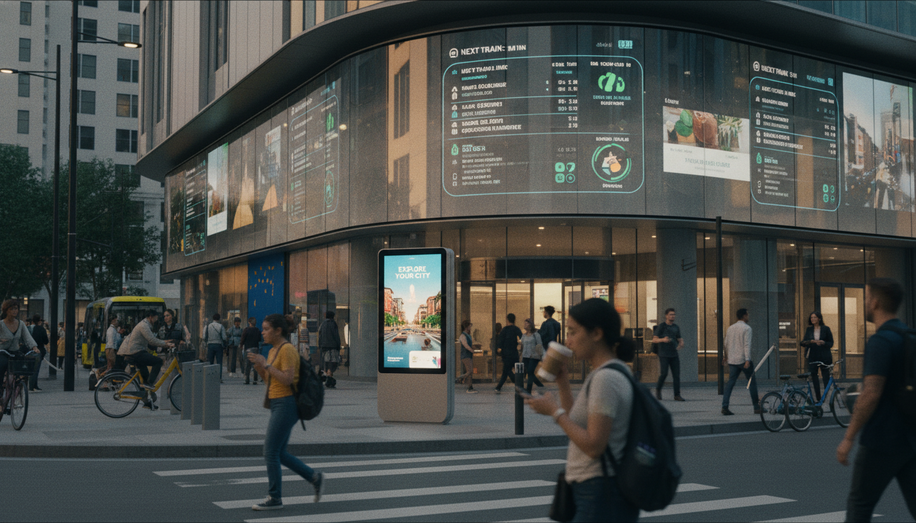

Out-of-home advertising is undergoing a fundamental transformation as cities worldwide embrace smart city initiatives, positioning OOH displays as critical nodes in urban information networks. Rather than serving solely as promotional vehicles, modern outdoor signage is becoming an essential infrastructure layer that bridges digital systems and physical urban spaces, fundamentally reshaping how cities communicate with their residents and visitors.
The convergence of OOH and smart city infrastructure creates unprecedented opportunities for advertisers, municipal planners, and urban dwellers alike. Traditional billboards have evolved into dynamic digital systems capable of real-time data integration, environmental responsiveness, and audience intelligence. This technological leap represents far more than aesthetic modernization; it reflects a strategic repositioning of outdoor advertising as a public utility within the broader smart city ecosystem.
At the core of this integration lies data connectivity. Smart billboards equipped with sensors and cameras collect environmental information including traffic patterns, weather conditions, and pedestrian demographics, processing this data through advanced algorithms to deliver contextually relevant content. This capability extends beyond commercial advertising. Cities can now leverage the same infrastructure to disseminate critical public information—from real-time transit updates to emergency alerts—transforming billboards into multi-purpose communication nodes that serve both commercial and civic functions.
Consider the practical applications across urban environments. Digital signage in busy commercial districts can display rotating advertisements for local businesses while simultaneously showcasing community events and cultural initiatives, strengthening neighborhood engagement and supporting local economies. Environmental monitoring represents another compelling use case: digital signs can display hourly pollution level updates alongside suggestions for sustainable behavior, such as promoting public transit usage or recycling initiatives, effectively educating citizens while fostering shared responsibility for environmental health.
The integration with municipal systems extends even further. Future smart city deployments promise data-sharing partnerships between billboard networks and city agencies, enabling billboards to synchronize messaging with event schedules, transit data, and emergency protocols. This interconnected approach means outdoor signage becomes genuinely responsive to urban conditions rather than operating in isolation. A billboard can adjust its brightness based on ambient light while simultaneously updating its content to reflect current traffic congestion or upcoming public events.
Interactive wayfinding represents a particularly valuable application for urban residents and visitors. Outdoor digital signage equipped with mapping technology and directional information can guide people through complex urban environments, displaying real-time transportation schedules and location-based services. When combined with technologies like QR codes and near-field communication, these displays create layered digital experiences that enhance mobility and accessibility.
From an operational perspective, centralized cloud-based management systems enable billboard operators to respond instantaneously to changing conditions. Rather than reacting to problems after they occur, operators can now anticipate disruptions using sensor data, adjusting content schedules, lighting, and energy consumption proactively. This capability improves campaign effectiveness while reducing operational costs and environmental impact through more efficient energy management.
The future trajectory suggests even deeper integration with emerging technologies. Artificial intelligence and machine learning will enable increasingly sophisticated audience targeting, with content adapting based on demographic analysis and behavioral patterns. Augmented reality capabilities promise immersive experiences that blend digital elements with physical surroundings, while advanced facial recognition systems may enable real-time message segmentation tailored to viewer profiles.
However, this technological evolution introduces important considerations for the industry. As OOH becomes more integrated into essential urban infrastructure, questions surrounding data privacy, algorithmic transparency, and equitable access to public messaging will demand careful attention. The successful integration of OOH into smart cities depends not only on technological sophistication but on building public trust through responsible data practices.
The synergy between outdoor advertising and smart city infrastructure represents a genuine paradigm shift. Rather than competing for attention in urban spaces, OOH and municipal systems can work together to create responsive, information-rich urban environments that benefit advertisers, city planners, and citizens. As cities continue deploying connected infrastructure, outdoor advertising’s role will only expand, evolving from a purely promotional medium into an essential component of intelligent urban systems that enhance mobility, safety, environmental awareness, and community engagement.
Blindspot’s advanced platform addresses these evolving demands by providing precise audience measurement, real-time campaign performance tracking, and programmatic DOOH management capabilities. This enables operators and city planners to transparently manage content delivery, optimize messaging for diverse urban populations, and rigorously measure effectiveness, fostering both commercial success and public trust in the smart city’s integrated communication infrastructure. Learn more at https://seeblindspot.com/