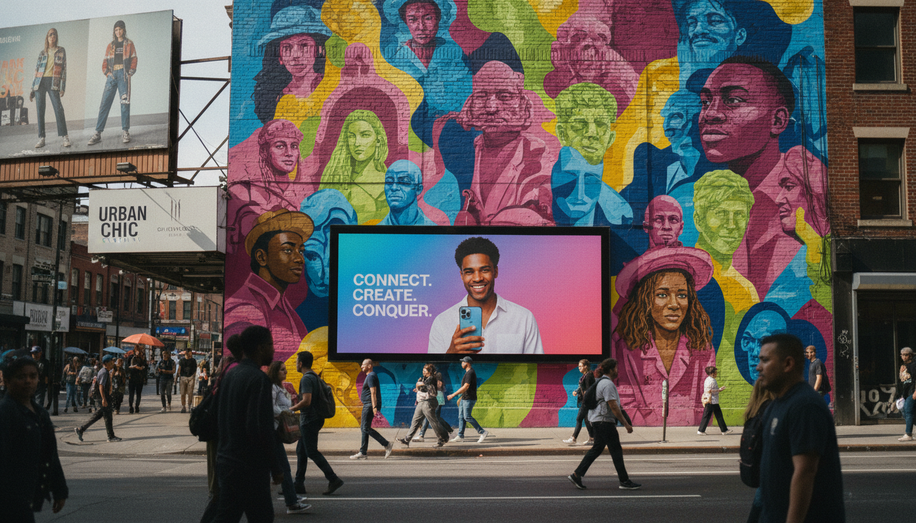

In the vibrant arteries of modern cities, where concrete walls pulse with color and creativity, out-of-home (OOH) advertising is undergoing a profound transformation. Street art and public murals, once dismissed as urban graffiti, have ascended to cultural cornerstones, inspiring advertisers to craft campaigns that dissolve the line between promotion and public aesthetics. This fusion not only elevates brand visibility but embeds messages into the urban fabric, turning passive passersby into engaged participants.
The rise of urban art as an OOH muse stems from its inherent authenticity and immediacy. In 2026, as the OOH sector surges toward a $9.89 billion valuation, marketers are ditching digital fatigue for physical immersion, where billboards and wraps blend seamlessly with murals that celebrate local identity. Consider the guerrilla tactics reshaping the medium: sidewalk chalk art, projections, and pop-up installations that mimic street art’s spontaneity, generating viral buzz without the sterility of static screens. These approaches capitalize on OOH’s unskippable nature—delivering unavoidable exposure in high-traffic zones free from ad blockers and algorithmic noise.
Brands are increasingly collaborating with street artists to co-create campaigns that resonate culturally rather than interrupt. Pearl Media highlights urban art collaborations as a top technique, where advertisers partner with local talents to produce installations that double as public murals, fostering community buy-in while hitting marketing KPIs. In bustling districts, these works transform blank walls into storytelling canvases, aligning ads with the city’s rhythm. A billboard on Los Angeles’ Sunset Boulevard, for instance, might echo the neighborhood’s mural scene, using bold strokes and vibrant palettes to weave brand narratives into the cultural landscape. This isn’t mere mimicry; it’s strategic symbiosis, where OOH leverages street art’s emotional pull to boost recall and relevance.
The mechanics of this blend are rooted in location intelligence and contextual relevance. Hyperlocal smart billboards, equipped with AI sensors, now adapt content to match surrounding murals—shifting hues with dusk or syncing themes to nearby festivals—enhancing perceived personalization without invasive tracking. Transit wraps on buses and subways extend this, morphing vehicles into rolling murals that commuters encounter repeatedly, reinforcing messages amid daily hustles. Nostalgic campaigns, like Paramount Pictures’ ‘Mean Girls’ transit ads, tap pop culture echoes akin to street art’s referential style, sparking immediate emotional connections in public spaces.
Sustainability amplifies the aesthetic merger. Eco-materials such as biodegradable vinyl and solar-powered displays mirror the ephemeral ethos of street art, appealing to 72% of consumers who favor green brands. Living plant billboards and water-based inks create verdant murals that evolve, blending ads with nature in urban oases. This aligns with 2026 trends where OOH prioritizes “helpful, not intrusive” creativity, using murals to convey purpose-driven stories—affordability, joy, humor—without preachiness.
Real-world examples illuminate the impact. Apple’s Olympic-timed OOH in high-footfall cities harnessed event-driven murals to amplify reach, proving how cultural moments supercharge seamless integrations. In West Hollywood, the Moving Image Media Art Program (MIMA) projects dynamic artworks on digital billboards, blurring lines between advertising and institutional art, captivating Sunset Strip audiences. Britannia’s ‘Nature Shapes Britannia’ campaign evoked organic mural vibes through earthy visuals on street furniture, lodging the brand in urban dwellers’ memories. These cases demonstrate measurable lifts: OOH drives 6% higher action rates and 1.3x purchase intent when contextually attuned, outperforming generic digital fare.
Critically, this evolution counters OOH’s historical criticisms of visual clutter. By emulating street art’s subtlety—monumental yet harmonious murals, subtle stencils—campaigns enhance cityscapes rather than dominate them. Street-level billboards at eye height foster intimate dialogues, while large-format wraps on building facades create immersive backdrops that generate social media shares, extending reach organically. In 2026, as street art matures into blue-chip investments, its influence legitimizes OOH as a cultural force, not just commercial noise.
Yet challenges persist. Navigating permissions for mural-like installs demands agile agencies, while ensuring scalability across formats—from hyperlocal street furniture to mass-reach highways—requires precision planning. Digital OOH (DOOH) bridges gaps, enabling programmatic tweaks that keep artistic ads fresh amid evolving urban aesthetics.
Ultimately, the interplay of urban art and OOH heralds a renaissance where advertising beautifies rather than bombards. As cities like those profiled in 2026 street art guides brim with inspirational styles—from hyper-realistic portraits to abstract interventions—brands that master this blend forge deeper loyalties. In an era craving authenticity, OOH’s mural-inspired creativity doesn’t just sell; it enriches the collective urban experience, proving that the most effective ads are those that feel like art.