
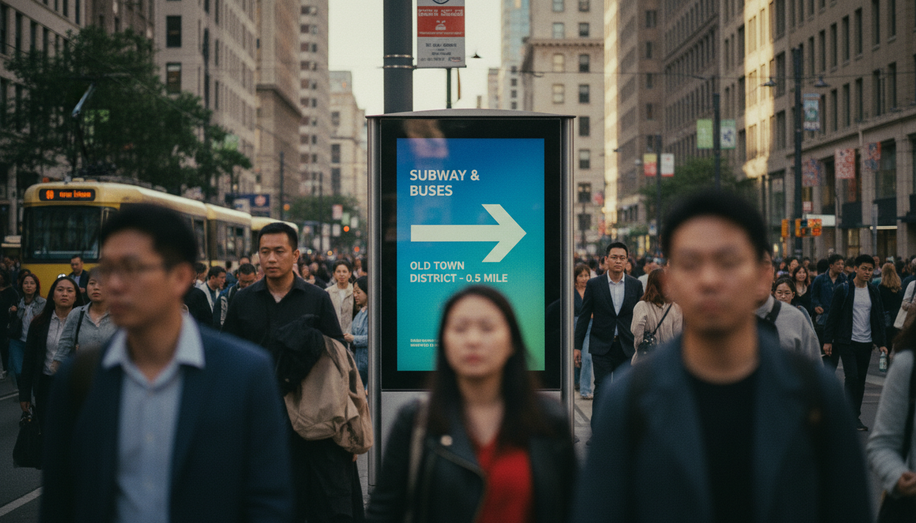

In bustling urban landscapes, out-of-home (OOH) advertising is shedding its commercial skin to become an indispensable ally in city navigation and public communication. Once confined to hawking products on billboards and bus wraps, OOH assets—both static and digital—are now powering wayfinding systems, delivering real-time alerts, and smoothing the pulse of metropolitan life. Cities and organizations worldwide are repurposing these familiar structures, from kiosks to transit shelters, to guide pedestrians, inform residents, and foster seamless urban flow.
Consider New York City’s Central Park, where digital kiosks stand as beacons amid the greenery. Equipped with interactive maps, these outdoor digital signage installations pinpoint points of interest, walking routes, restrooms, and events, transforming a sprawling 843-acre park into an intuitive playground for visitors. Similarly, Disney theme parks deploy vast networks of digital screens to orchestrate guest movement through labyrinthine layouts. Real-time displays of ride wait times, show schedules, dining options, and directional cues ensure crowds navigate expansive grounds without friction, blending utility with entertainment. These examples illustrate a broader shift: OOH is evolving from passive promotion to active infrastructure.
Transportation hubs exemplify this trend at scale. Airports, train stations, and bus terminals rely on outdoor digital signage for critical wayfinding, flashing live flight updates, platform directions, baggage claim locations, and transit schedules. In high-traffic environments where confusion breeds delays, these screens cut through chaos, delivering multilingual support and emergency notifications to millions of travelers daily. Static counterparts, like wayfinding signs at store entryways or pylon markers on highways, complement this by providing enduring directional anchors—tall, unmissable structures that capture fleeting attention from speeding motorists. Bus benches and shelters, often adorned with clear directional graphics, extend this service to waiting pedestrians, doubling as low-cost nodes in a city’s informational web.
Public service announcements (PSAs) further amplify OOH’s civic role. Street furniture—benches, news kiosks, and information booths—delivers timely updates on everything from weather warnings to health advisories, reaching diverse audiences who cannot simply scroll away. Digital out-of-home (DOOH) takes this further with dynamic capabilities: geotargeting tailors messages to local contexts, while touchscreens and augmented reality invite interaction. Imagine a bus shelter screen alerting commuters to delays, reroutes, or even lost child protocols, all while promoting nearby events. Universities harness similar tech on campuses, overlaying interactive maps with shuttle info, building directories, and emergency alerts to aid students and visitors in navigating sprawling grounds.
Healthcare facilities are jumping aboard, installing outdoor digital signage to direct patients to clinics, parking, and amenities, complete with wait times and appointment reminders. Tourist hotspots and city centers follow suit, weaving historical tidbits, walking tours, and event listings into wayfinding kiosks, often with multilingual interfaces to welcome global visitors. This integration not only enhances user experience but also boosts local economies by spotlighting attractions and transit options.
The advantages are clear: OOH’s prime real estate—high-visibility spots like transit routes and public plazas—ensures broad, unavoidable reach. Static signs offer reliability and cost-effectiveness, enduring weather and time, while digital variants provide agility, updating in real time via data analytics. Innovations like immersive pop-ups and AR overlays are pushing boundaries, turning signage into memorable experiences that encourage social sharing. Yet challenges persist, from securing municipal contracts to balancing commercial and public messaging.
Critics might argue this blurs lines between advertising and infrastructure, risking clutter. But evidence from successful deployments counters that: enhanced navigation reduces congestion, cuts staff queries, and elevates satisfaction. Agencies specializing in OOH note that research-driven placement—mapping high-traffic zones and audience habits—maximizes impact. As cities grapple with population growth and smart urbanism, OOH stands poised to lead.
In essence, OOH is redefining urban flow, proving that billboards and benches can do more than sell—they can connect, inform, and guide. From Disney’s polished parks to gritty transit terminals, these assets are scripting smarter cities, one screen at a time.