
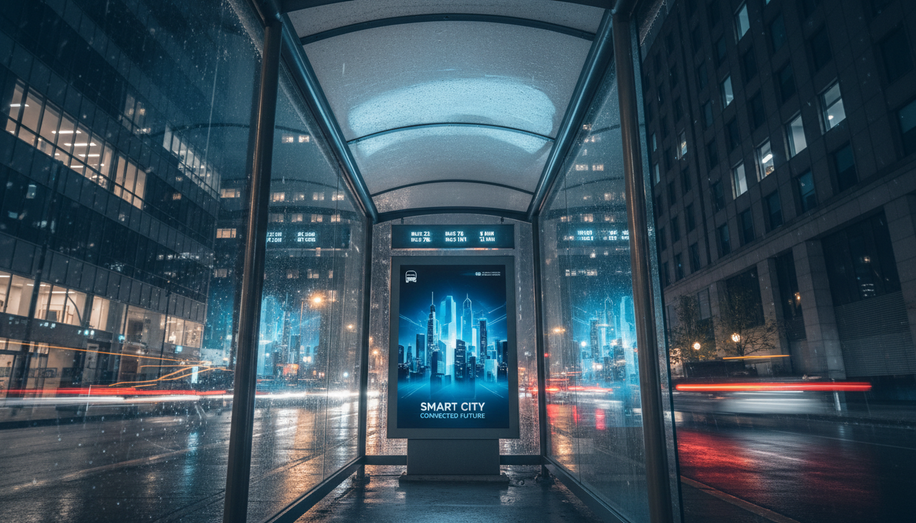

In the bustling arteries of modern metropolises, out-of-home (OOH) advertising is evolving from mere visual spectacle to a vital cog in the machinery of smart cities. Digital displays, once static billboards hawking products, now pulse with real-time data, syncing seamlessly with urban infrastructure to deliver not just ads, but actionable intelligence to citizens. This integration transforms advertising into a multifaceted tool, blending commerce with public utility in environments where sensors, IoT devices, and AI orchestrate everything from traffic flow to energy efficiency.
Smart cities, defined by their use of technology to enhance sustainability and and livability, provide fertile ground for this shift. Streetlights dimmed by AI to save power, traffic systems rerouting congestion—these systems generate vast streams of data that OOH displays can tap into. Consider a digital billboard at a busy intersection: it analyzes traffic patterns, weather, and pedestrian demographics via embedded cameras and connected sensors, then tailors content accordingly. During rush hour, it might promote coffee for weary commuters; in rain, waterproof gear appears instantly. This data-driven personalization boosts engagement, with studies showing higher interaction rates when ads feel relevant rather than random.
Beyond relevance, these displays integrate directly with public services, blurring lines between promotion and infrastructure. In Tokyo’s Shibuya district, AI-powered billboards adjust messaging based on crowd age and gender, drawing crowds that linger for the spectacle. Similarly, New York’s Times Square screens shift to interactive tourist info or real-time transit updates, enhancing the urban vibe while serving advertisers. Emergency overrides exemplify deeper fusion: during crises, billboards hijack their cycles to broadcast alerts from municipal systems, prioritizing public safety over sales. IoT enables this remote management, allowing operators to automate scheduling, optimize energy via solar integration, and even sync with event calendars or transit data for hyper-local relevance.
This connectivity extends to interactivity, turning passive viewers into participants. Touchscreens on hybrid displays offer maps, directories, or transport timetables alongside ads, fostering dwell time that amplifies brand exposure. Augmented reality (AR) layers digital overlays onto the real world—imagine scanning a billboard for virtual try-ons or gamified promotions—while facial recognition segments content in real time without compromising privacy through anonymized aggregates. In one viral example, interactive OOH in urban hotspots creates amusement zones, where ads loop into entertainment, drawing lines of people and reshaping public spaces into tech-infused hotspots.
For advertisers, the payoff is measurable and profound. Real-time analytics track engagement, footfall, and conversions, far surpassing traditional metrics. Dynamic content reduces visual clutter, as screens display only pertinent ads, aligning with smart cities’ aesthetic and efficiency goals. Sustainability gains traction too: energy-efficient LEDs and solar-powered units cut consumption, appealing to eco-conscious brands and regulators. Partnerships with city agencies unlock data-sharing, refining campaigns—billboards might promote events synced to sensor-detected crowd flows or alert to environmental hazards.
Yet challenges persist. Privacy concerns loom large with data-heavy personalization; regulations demand transparent handling to build trust. Infrastructure costs and interoperability between proprietary systems could slow adoption, though standards are emerging. Still, the trajectory is upward. As urbanization accelerates, OOH’s role expands: AI will enable predictive content, machine learning will forecast audience behavior, and 5G will power immersive AR experiences.
Forward-thinking cities like those pioneering these technologies signal a symbiotic future. OOH no longer competes with urban data; it harnesses it, creating cohesive ecosystems where advertising funds public good. In Singapore or Barcelona, early adopters already weave digital screens into smart grids, proving the model. For the industry, success hinges on collaboration—with tech firms for AI, municipalities for data access, and sustainability experts for green tech.
Ultimately, OOH in smart cities redefines urban interaction. These displays illuminate streets not just with light, but with intelligence, fostering connected communities where commerce enhances daily life. As cities grow smarter, advertising follows suit, promising a landscape where every glance informs, engages, and elevates the human experience.