
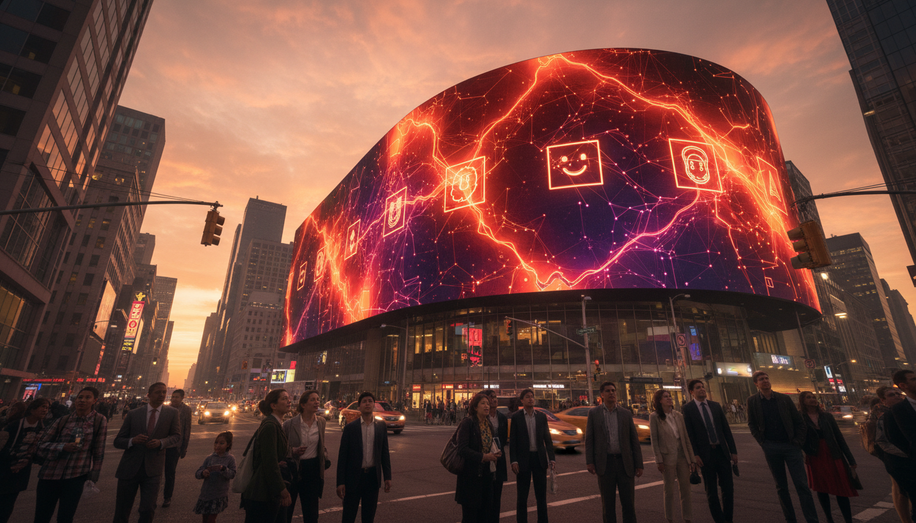

Artificial intelligence is fundamentally reshaping how brands connect with audiences through outdoor advertising, moving the industry from static, one-size-fits-all messaging to dynamic, data-driven campaigns that respond to real-world conditions in real time. This transformation represents a paradigm shift in media planning, enabling advertisers to achieve unprecedented levels of precision, personalization, and measurable results.
At the core of this evolution lies AI’s ability to predict and understand audience behavior with remarkable accuracy. Machine learning models now analyze vast datasets encompassing mobility patterns, weather conditions, geolocation information, and demographic profiles to identify where and when audiences are most receptive to advertising messages. In major urban centers, this translates to concrete advantages. Advertisers can anticipate traffic peaks along specific routes during rush hours and adjust their messaging accordingly, switching from brand awareness campaigns to promotional content at the moment when consumers are most likely to engage. This level of predictive capability transforms outdoor advertising from a static medium into an intelligent, responsive channel that evolves throughout the day.
The emergence of dynamic out-of-home (DOOH) advertising platforms has made real-time personalization possible at scale. Rather than displaying the same creative to every passerby, AI-powered systems now automatically adjust visual content based on contextual triggers drawn from the surrounding environment. When temperatures spike, beverage brands can immediately promote refreshing drinks to thirsty pedestrians. During traffic slowdowns, quick-service restaurants appear on screens to capture hungry commuters. During major sporting events, brands can deploy localized promotions that resonate with the heightened emotional engagement of fans gathered near stadiums. This contextual intelligence ensures that advertisements are not merely seen—they are relevant, timely, and aligned with immediate consumer needs.
The impact on advertiser effectiveness is substantial and measurable. According to industry data, AI-powered personalization can boost ad recall by up to 40 percent compared to static formats. Beyond recall, advertisers gain access to comprehensive performance analytics that were previously unavailable in outdoor media. They can now track impressions, engagement rates, and conversion metrics in real time, analyzing foot traffic patterns and attributing sales lifts directly to specific outdoor placements. This transparency enables data-driven decision-making and continuous optimization, allowing brands to allocate budgets more efficiently and maximize return on investment with unprecedented precision.
The sophistication of audience targeting has also advanced dramatically. AI-powered location intelligence tools enable advertisers to identify premium placements by analyzing pedestrian traffic patterns, demographic profiles, and proximity to key points of interest. Rather than relying on intuition or historical estimates, brands can now deploy campaigns with surgical precision, placing advertisements in high-traffic areas that align with their target audience composition. A sportswear brand, for instance, can use AI to identify areas with high concentrations of their demographic near sports venues during major events, ensuring maximum resonance and engagement.
Looking forward, the next frontier is programmatic DOOH—a fully automated ecosystem where AI manages ad buying, scheduling, and optimization across multiple screens from a unified dashboard. This development promises to revolutionize campaign management, enabling brands to execute nationwide campaigns that automatically adapt based on real-time performance metrics, audience density, audience behavior, and environmental conditions. Agencies and brands gain both transparency and operational efficiency, managing complex, multi-screen campaigns with unprecedented ease and control.
As AI technology continues to mature, the outdoor advertising industry stands at an inflection point. The convergence of artificial intelligence, machine learning, and digital signage is creating an entirely new category of media—one that combines the scale and reach of traditional outdoor advertising with the precision, personalization, and measurability typically associated with digital channels. For brands willing to embrace these technologies, the opportunity is clear: deliver the right message to the right person at the right moment, captured in data that proves the investment worked. The future of outdoor advertising is not just smarter—it is fundamentally more effective.
Blindspot directly empowers this future, offering a unified platform for programmatic DOOH campaign management that delivers unparalleled precision and measurability. Through real-time campaign performance tracking, audience measurement, and robust ROI attribution, brands can definitively prove the effectiveness of their OOH investments. Explore how Blindspot elevates OOH effectiveness at https://seeblindspot.com/.