
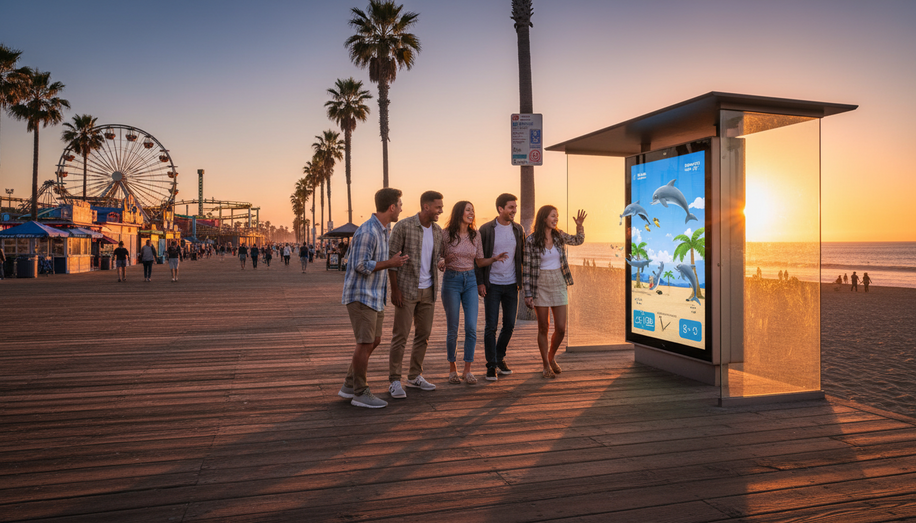

In the bustling rhythm of urban life, where commuters huddle at bus shelters amid the hum of traffic and the chill of waiting, a quiet revolution is underway. Traditional posters and backlit panels are giving way to interactive spectacles that transform these everyday fixtures into dynamic brand playgrounds, capturing attention not just for seconds but for the full duration of a standstill commute. Agencies like NPARALLEL + Atomic Props are leading the charge, fabricating custom installations that turn shelters into immersive environments, proving that engagement peaks when advertising invites participation rather than demands observation.
Consider the captive audience dynamic: riders aren’t darting by at 60 miles per hour or buried in their screens during a hurried walk. They’re paused, often for minutes, in high-traffic nodes that blend pedestrian footfall with driver glances, offering unparalleled dwell time. This window of opportunity has spurred innovators to layer in technology and creativity, elevating bus shelters from passive displays to active experiences. Digital screens now pulse with content tailored to the time of day—morning motivation for rush-hour crowds, evening escapism for night owls—while motion sensors trigger personalized responses, making every wait feel bespoke.
One hallmark of this shift is augmented reality (AR), which overlays digital wizardry onto the real world visible through shelter windows. Grand Visual’s campaign for Pepsi Max exemplifies this: a standard shelter became a portal to chaos, projecting laser-shooting robots, plummeting asteroids, and tentacled manholes onto the street ahead via depth-mapped cameras and bespoke 3D assets. Unsuspecting passersby gawked as virtual mayhem unfolded in real time, sparking viral videos that amassed over 8 million YouTube views in days and earned features on CNN and BBC, with 95% of the buzz generated organically. Such stunts don’t just entertain; they weaponize shareability, turning commuters into unwitting ambassadors who amplify reach far beyond the shelter’s footprint.
Tactile interactions take engagement further, blurring the line between ad and amusement. NPARALLEL’s Coca-Cola shelter hid refrigeration and vending tech within a slim 7-inch panel, dispensing free cans to anyone flashing a smile at a facial recognition camera—a simple gesture yielding instant reward and memorable delight. Similarly, Skrewball’s 10-foot scented bottle installation enveloped the shelter in whiskey aromas, creating a branded sensory bubble that lingered in riders’ minds long after the bus arrived. These aren’t gimmicks; they’re engineered for virality, with custom fabrication allowing brands to bend standard dimensions into oversized replicas or functional prototypes that simulate product use.
Even simpler mechanics can yield outsized impact. Caribou Coffee heated actual bus shelters to mimic ovens, coils glowing with real warmth to promote hot breakfast sandwiches during Minnesota winters, warming both bodies and brand affinity. Yahoo! installed 72-inch touchscreens for neighborhood rivalries, pitting San Francisco districts against each other in live social games that fostered competition and community. And IKEA reimagined a Milan stop as a full bedroom showcase, demonstrating how organized spaces enhance well-being through cozy, life-sized vignettes that invited lingering gazes.
For brands eyeing scalability, digital street furniture networks amplify these ideas across cities. OUTFRONT Media’s shelters incorporate 3D spatial creative, data triggers, and live feeds, syncing ads to weather, traffic, or events for contextual relevance. oOh!media in Australia deploys them near supermarkets and beaches, targeting “stand-by” audiences with wraps and special builds that influence the path to purchase. Chanel elevated luxury with data-driven interactivity, turning urban furniture into a high-end dialogue that collected insights while exuding elegance.
Yet success hinges on integration: these shelters shine brightest as threads in broader OOH tapestries, linking to 3D billboards, wallscapes, or social extensions. Metrics back the hype—research shows transit shelters often outperform larger billboards in engagement, especially where static options dominate. Challenges remain, from fabrication costs to city regulations, but agencies mitigate with in-house facilities like NPARALLEL’s 160,000-square-foot Minneapolis hub, enabling rapid prototyping and installs.
As 2026 unfolds with events like the World Cup on the horizon, interactive shelters stand poised to own urban moments. By dispensing smiles, scents, and surrealities, they don’t just advertise—they activate, forging emotional bonds in the unlikeliest of places. Commuters emerge not annoyed by delays, but enriched by encounters, proving that in OOH’s evolving landscape, the wait is the opportunity.