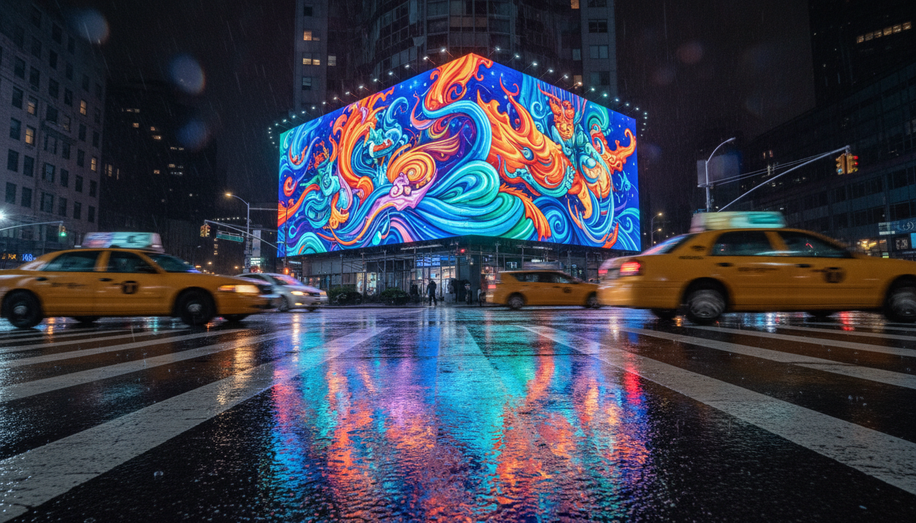
In the bustling public spaces of cities worldwide, out-of-home (OOH) advertising is evolving from a mere commercial tool into a vibrant platform for cultural expression and community support. Brands and media owners are increasingly partnering with local artists to transform billboards, bus shelters, and wallscapes into canvases that showcase regional talent, tell authentic stories, and drive social good. These initiatives not only amplify artistic voices but also foster deeper connections between advertisers, communities, and the places they inhabit.\n\nOne of the most compelling aspects of this trend is its ability to infuse advertising with genuine local flavor. Traditional billboards often deliver generic messages, but collaborations with artists allow brands to co-create visuals that reflect community identity and values. For instance, Effortless Outdoor Media highlights how partnering with respected local creatives builds community credibility, adds storytelling depth, and generates content for social media, PR, and local press. This approach turns a promotional space into a cultural touchpoint, boosting emotional engagement and positive brand perception, particularly among values-driven younger consumers.\n\nMedia companies like Orange Barrel Media (OBM) have long championed this model. Since 2004, OBM’s #OBMarts program has integrated art into its outdoor inventory, collaborating with local and international artists, museums, and curators to activate public spaces. A standout example is Walls for a Cause NYC, launched in 2020, where nine contemporary artists painted large-scale murals on OBM wallscapes across Brooklyn and Manhattan. Curated by Joeonna Bellorado-Samuels and Diana Nawi, the project combined public art with philanthropy, expanding access to diverse audiences and enriching urban environments. Similarly, OBM’s Art for Action campaign ahead of the 2020 U.S. election featured works by artists like Carrie Mae Weems and Jenny Holzer on billboards nationwide. This non-partisan effort countered voter suppression through dynamic public art, marking the largest geographically diverse voter awareness initiative of its kind.\n\nGlobally, JCDecaux has demonstrated OOH’s potential as a public art gallery. In Guatemala City, its 13-year partnership with the Rozas-Botrán Foundation has turned advertising panels into an open-air exhibition called Arte en las Calles (Art in the Street). Local artists’ works, celebrating Latin American culture and inclusivity, appear across the city, with complementary gallery experiences including Braille cards and audio descriptions for the visually impaired. This bridges the gap between art and everyday citizens, sparking greater interest in regional creativity. In Lithuania, JCDecaux’s annual award for young artists, co-run with the Contemporary Arts Centre of Vilnius, grants the winner €4,000 and a month-long display on nationwide furniture. The recent recipient, Matas Janušonis’s “The Pulse,” an interactive installation capturing urban sounds and movements, pulsed with real-time city life on public displays before moving to a gallery.\n\nCloser to home in North America, initiatives like Winnipeg’s Resilience and Light Capsules projects reimagined billboards as beautifying elements in the visual landscape. These efforts, which inspired similar programs in Calgary, Hamilton, and Saskatoon through organizations like Arbutus Greenway Billboards and Hamilton Artists Inc., prioritize local stories and aesthetic enhancement over pure commerce. They uphold a social contract by contributing to public richness rather than cluttering it. Apple’s “Shot on iPhone” campaign exemplifies brand involvement, featuring location-specific billboards with images from regional photographers and artists, blending product promotion with authentic community imagery. Converse took it further with “City Forests,” commissioning muralists to paint billboards using air-purifying paint, merging environmental advocacy and local artistry.\n\nPublic health and civic campaigns further illustrate OOH’s versatility. In cities like Atlanta and Detroit, agencies have teamed with local creatives for billboards promoting voting, vaccinations, and mental health, using the medium as a canvas for social change. Programs like ArtPop in other regions provide 20 local artists yearly with exposure valued at over $8.5 million through public ad campaigns, directly supporting emerging talent.\n\nFor advertisers eyeing these opportunities, success hinges on strategic execution. Clear guidelines on campaign messages, formats, and timelines, paired with creative freedom in style and tone, empower artists as co-strategists rather than mere designers. Tying partnerships to broader initiatives—such as donating proceeds to arts programs, hosting unveilings, or integrating into festivals—elevates billboards from ads to cultural moments. Challenges like approval processes can arise, but treating artists as partners mitigates them, yielding earned media and lasting goodwill.\n\nUltimately, these collaborations reposition OOH as a force for cultural vitality. Billboards become murals that inspire, connect, and sustain communities, proving that advertising can profitably align with public good. As urban spaces demand more than sales pitches, supporting local artists through OOH not only drives engagement but also weaves brands into the fabric of the places they serve, creating equity that endures long after the campaign ends.\n\nFor brands seeking to seamlessly integrate into local cultural landscapes and measure the genuine impact of these art-infused campaigns, Blindspot offers essential tools. Its location intelligence and audience measurement capabilities enable precise placement of artistic OOH initiatives in community-resonant spots, while robust ROI measurement and attribution prove the tangible value of fostering deeper community connections. This ensures that culturally rich advertising effectively serves both public good and commercial objectives. https://seeblindspot.com/\n\n
OOH Advertising Evolves: Partnering with Artists for Cultural Expression and Community Support