
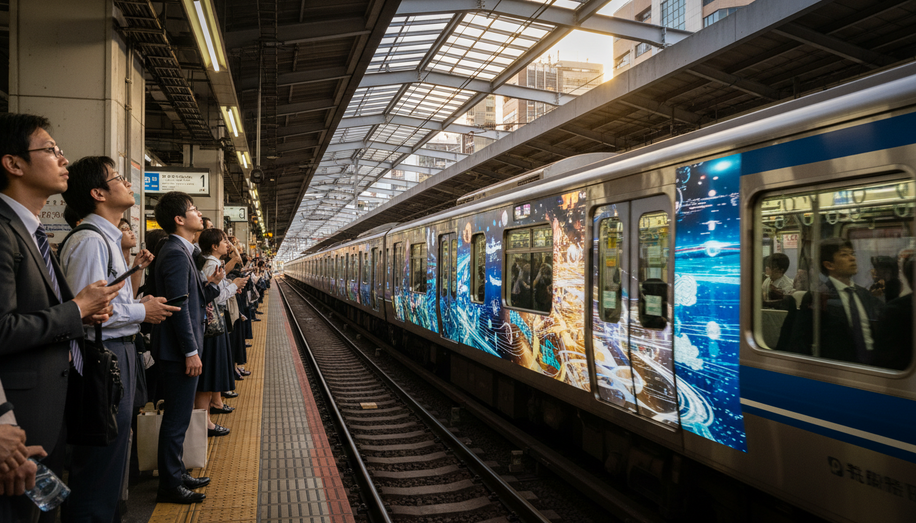

Transit advertising has evolved far beyond static posters and generic billboards. Today’s most successful campaigns transform the daily commute into engaging brand experiences that resonate with passengers long after they’ve reached their destination. By integrating creativity, interactivity, and contextual relevance, brands are discovering that transit environments offer unprecedented opportunities to connect with audiences in meaningful ways.
The power of transit advertising lies in its captive audience and repeated exposure. Commuters encounter transit ads at multiple touchpoints—inside train cars, on station platforms, at bus shelters, and along subway corridors—creating numerous opportunities for messaging to take hold. However, capturing attention in these spaces requires more than conventional approaches. The most memorable campaigns go beyond traditional 2D visuals to create immersive experiences that engage multiple senses and invite active participation.
Consider how Nintendo transformed a New York City subway car into a life-sized Switch console, or how Caribou Coffee converted transit shelters into functioning ovens that radiated warmth during Minnesota winters. These campaigns succeeded because they recognized a fundamental truth: commuters appreciate brands that acknowledge and enhance their daily experience rather than simply interrupting it. By providing practical value or entertainment, advertisers foster positive brand associations that drive long-term loyalty.
Interactive elements have become increasingly central to innovative transit advertising strategies. QR codes strategically placed on posters and bus stops invite commuters to unlock additional content, participate in contests, or access exclusive rewards, transforming advertisements into interactive journeys. More sophisticated technologies are also emerging. KLM’s responsive billboard in Sweden uses AI-powered sound detection to identify coughing and sneezing, automatically switching messaging to relevant offers like flexible travel cancellations. Such technology demonstrates how brands can deliver contextually appropriate messaging that feels genuinely helpful rather than intrusive.
Station domination represents another powerful approach. By saturating a single high-traffic transit location with multiple coordinated ads simultaneously, brands create an immersive takeover that proves impossible to ignore. This saturation strategy transforms an ordinary commute into a branded environment, whether through comprehensive poster coverage in corridors or through interior and exterior vehicle wraps that surround passengers from multiple angles.
The most effective transit campaigns also leverage local relevance and cultural context. Ads that resonate with the daily experiences and interests of specific commuter communities are significantly more likely to capture attention than generic messaging. BBC’s “Sherlock Holmes Mystery Train” campaign wrapped a London train to resemble a crime scene, turning the regular commute into an intriguing puzzle-solving adventure. This approach tapped into both the show’s fanbase and commuters’ natural inclination toward engagement and entertainment during travel time.
Physical customization of transit vehicles themselves offers compelling creative opportunities. Full bus wraps can create visual illusions—such as a zoo-themed bus that appears filled with exotic animals—while seasonal designs align messaging with local events and cultural moments. These approaches transform buses from mere advertising platforms into moving art installations that become conversation starters and social media moments.
The underlying principle connecting these successful campaigns is clear: contemporary commuters expect more from the brands they encounter. They respond positively when advertising acknowledges their context, respects their time, and offers genuine value through entertainment, information, or practical benefit. Transit advertising that achieves this balance doesn’t feel like an interruption but rather an unexpected enhancement to their journey.
As brands continue to explore transit advertising possibilities, the convergence of creative design, interactive technology, and passenger-centric thinking will likely drive even more innovative approaches. The commute, once viewed as dead time to be endured, is increasingly becoming recognized as a prime opportunity for meaningful brand engagement. For advertisers willing to invest in creativity and passenger experience, transit environments represent one of the most dynamic and rewarding advertising frontiers available. Powering this shift towards more effective and engaging transit experiences, platforms like Blindspot offer crucial capabilities such as location intelligence and audience measurement to pinpoint ideal placements and tailor contextually relevant messaging. Combined with programmatic DOOH management and real-time performance tracking, Blindspot enables brands to dynamically optimize campaigns for maximum commuter resonance and measurable ROI. https://seeblindspot.com/