
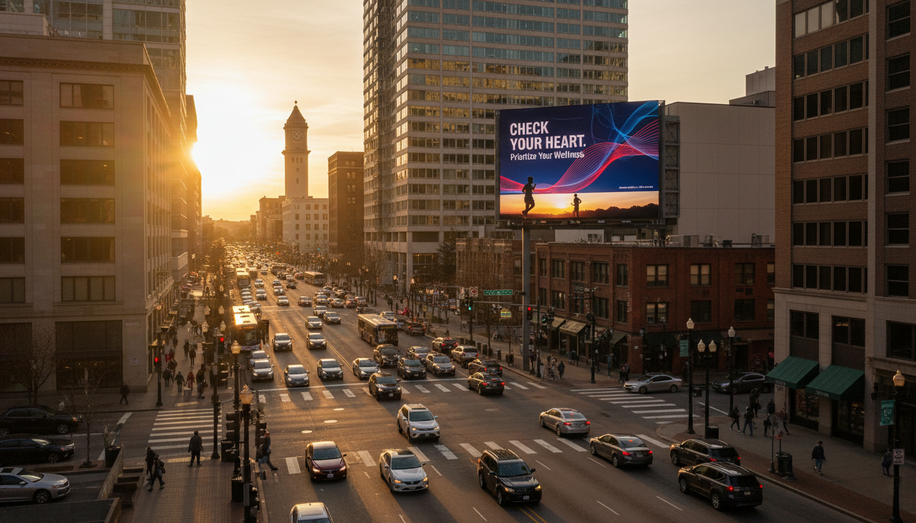

In the bustling rhythm of urban life, where commuters rush past towering billboards and pedestrians glance at transit ads, out-of-home (OOH) advertising emerges as a silent yet potent force in health awareness campaigns. Far from mere visual noise, strategically placed OOH messages cut through the daily grind to deliver critical health information, fostering community well-being and prompting real behavioral shifts. Recent campaigns demonstrate that when OOH is harnessed thoughtfully, it achieves awareness lifts as high as 88% for disease prevention methods, alongside 75% increases in medication recognition and 62% ad recall rates.
This effectiveness stems from OOH’s unique ability to intercept audiences in moments of natural receptivity. Unlike digital ads that demand screen time, OOH integrates into everyday environments—fitness centers, doctor’s offices, high-traffic transit hubs—where people are already primed for health-related thoughts. A New York City campaign targeting disease prevention blended static and digital formats to maximize flexibility, placing ads in venues aligned with audience mindsets. The result? Not only heightened awareness but a 33% uptick in consideration for preventive measures, signaling tangible movement toward healthier choices. Such placements transform passive exposure into active engagement, as people encounter messages during routines that reinforce wellness priorities.
OOH’s amplifying power extends beyond standalone impact. When layered with online or TV efforts, billboards boost digital reach by 316% and TV effectiveness by 18%, making other channels more potent. For healthcare providers, this means hyper-local messaging near urgent care centers or clinics delivers contextually relevant content about check-ups and preventive care, building trust amid challenges like workforce shortages and misinformation. Research confirms patients notice and favorably view billboard ads, with effects persisting across new and returning clients, though creative rotation every three weeks combats wearout. In mass-messaging scenarios, such as annual health insurance enrollments, OOH’s broad reach via buses, trains, and high-traffic spots ensures repeated exposure, filling consideration funnels and driving searches.
Corporate social responsibility (CSR) initiatives further underscore OOH’s role in community health. On occasions like World Health Day, businesses deploy billboards and eco-friendly signage to promote wellness, mental health, and disease prevention, partnering with hospitals or fitness brands. High-traffic locations—shopping malls, parks, public transport—guarantee unavoidable visibility, educating on preventive care, vaccination drives, and fitness challenges while enhancing brand loyalty. Integrating QR codes links these displays to deeper resources, blending immediacy with interactivity to spur action. For Medicare outreach, billboards in trafficked areas effectively educate on benefits, proving OOH’s value in public health education.
Yet, the medium’s influence invites scrutiny. While OOH excels in positive campaigns, critics note its potential downsides when promoting unhealthy products, such as high-fat, salt, or sugar items, which can contribute to obesity and normalize harmful behaviors in deprived areas. This duality highlights the need for purpose-driven strategies: health campaigns must prioritize ethical, targeted placements to avoid deepening inequalities and focus on uplift.
Targeted local efforts amplify these benefits. Mobile billboards and place-based ads in grocery stores or gas stations embed health messages into community fabric, rivaling traditional formats in patient awareness and engagement. OOH’s brand-safe nature—trusted by 45% of consumers when combined with digital—counters fragile credibility in healthcare, positioning providers as reliable advisors. As post-pandemic realities evolve, from new facilities to life-saving procedures, OOH’s mass touchpoints remain essential for general public campaigns.
Ultimately, OOH’s resurgence in health awareness reflects its evolution from broad blasts to intelligent integrations. Data from the Out of Home Advertising Association of America shows more adults noticing these ads, especially healthcare ones at 58% recall. By choosing placements with purpose, leveraging hybrid formats, and aligning with CSR goals, campaigns not only raise awareness but cultivate lasting community well-being. In an era of fragmented media, OOH stands as a bridge to real-world health outcomes, proving that the right message in the right moment can indeed change lives.